A self-employed handyman usually needs measuring tools, basic hand tools, power tools, fixings, safety gear, ladders or access equipment, cleaning gear, secure storage, a reliable vehicle and a simple quoting or invoicing setup.
Start with tools you will use every week. Upgrade as paid work grows.
Handyman Tools Checklist
If you are starting out, prioritise measuring gear, basic hand tools, a cordless drill, safety gear, consumables and secure storage.
| Category |
Examples |
Buy first or later? |
| Measuring tools |
Tape measure, level, square, pencil |
Buy first |
| Hand tools |
Hammer, screwdrivers, pliers, wrench |
Buy first |
| Power tools |
Drill, impact driver, sander |
Buy first/soon |
| Safety gear |
Gloves, glasses, masks, boots, portable RCD |
Buy first |
| Ladders and access |
Step ladder, extension ladder |
Depends on services |
| Consumables |
Screws, anchors, sealant, tape |
Buy first |
| Cleaning gear |
Broom, rags, bucket, vacuum |
Buy first/soon |
| Storage |
Toolbox, ute drawers, labels |
Buy first/soon |
| Specialist tools |
Nail gun, laser level, pressure washer |
Buy later or hire first |
Start With the Services You Offer
Your tool kit should match the jobs you plan to do. A handyman who mainly assembles furniture needs a different setup from someone doing property maintenance, painting, pressure cleaning or small carpentry repairs.
Before buying tools, ask:
- What jobs will I offer first?
- What tools will I use every week?
- What can I hire instead of buying?
- What work is outside my skill, licence or insurance scope?
Buying every tool upfront can drain cash quickly. Start lean, then upgrade when the work justifies it. For more context, read upcover’s guides on what a handyman does in Australia and how to become a handyman in Australia.
What Are the Essential Hand Tools for a Handyman?
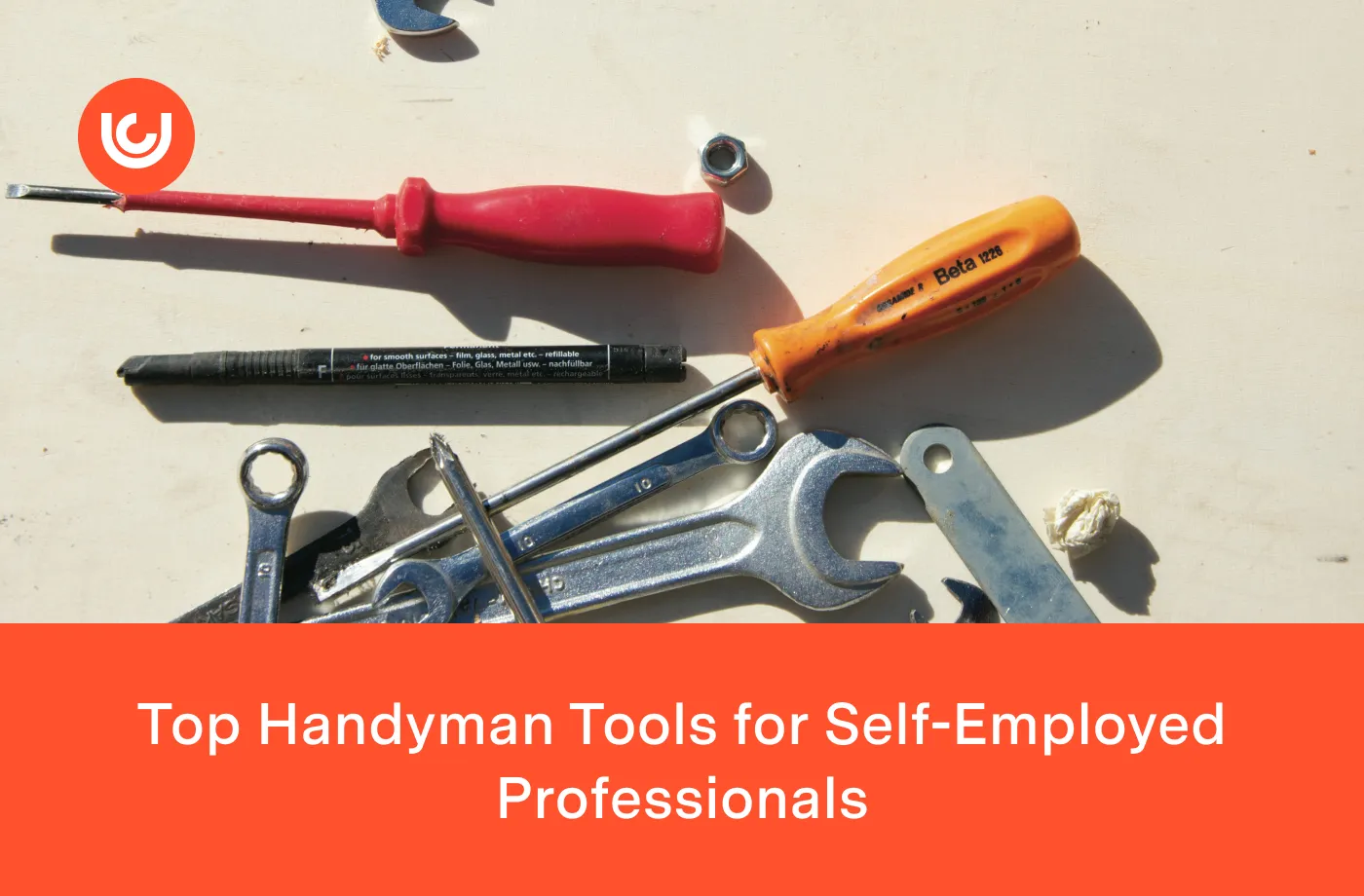
Hand tools are the tools you will reach for on most small repair, installation and maintenance jobs. Start with five essentials:
- Hammer: useful for small fixes, light demolition, hanging and general repair work.
- Screwdriver set: needed for furniture assembly, fixtures, fittings and basic adjustments.
- Pliers and adjustable wrench: helpful for gripping, tightening, loosening and small mechanical fixes.
- Tape measure and level: important for accurate shelves, blinds, fixtures and wall-mounted items.
- Utility knife: useful for cutting packaging, trimming materials and general on-site tasks.
You can then add items such as clamps, Allen keys, a socket set, handsaw, stud finder, square and pencils as your jobs become more varied.
What Power Tools Should a Handyman Buy First?
Power tools save time, but they can get expensive quickly. Start with tools you are likely to use every week. The five most useful starter power tools are:
- Cordless drill: useful for drilling holes, assembling furniture and installing fixtures.
- Impact driver: helpful for driving screws quickly and handling repeated fixing work.
- Sander: useful for small repairs, surface prep and basic painting jobs.
- Multi-tool: handy for trimming, cutting, scraping and awkward small fixes.
- Work light: useful in garages, cupboards, under sinks and dim work areas.
A good rule is to commit to one battery platform early. Mixing brands can mean carrying multiple chargers, buying duplicate batteries and wasting space in your ute or van. Depending on the services you offer, you can add tools like a circular saw, jigsaw, wet/dry vacuum or specialist cutting tools later.
Owning a tool does not mean you are legally allowed to do the work. Electrical, plumbing, gas, asbestos, structural and some building work may require licensed trades. For more detail, see upcover’s guide on what licence a handyman needs in Australia.
What Safety Gear Does a Handyman Need?
Safety gear should be part of your starter kit, not something you buy after something goes wrong. Start with:
- Safety glasses: help protect your eyes from dust, chips and flying debris.
- Work gloves: useful for handling timber, sharp edges, garden waste and rough materials.
- Ear protection: important when using loud power tools.
- Dust mask or respirator: useful for sanding, cutting and dusty jobs.
- Steel-cap boots: help protect your feet on job sites and while moving heavy items.
You may also need knee pads, sunscreen, a first aid kit and a portable RCD or safety switch when using portable electrical equipment. A residual current device, also called an RCD or safety switch, is designed to switch off electricity when certain electrical faults are detected. It may help reduce electrical shock risk when using portable power tools, depending on the work environment and setup.
Safety gear does not replace training. If a job involves heights, asbestos, electrical work, structural work or unfamiliar risks, check the requirements before starting. For more on training and safety, read upcover’s guide to handyman training requirements.
What Fixings and Consumables Should You Carry?
Small supplies save time because you are not running to the hardware store for every screw, anchor or blade. A practical starter kit should include:
- Screws and nails: useful for common repairs, fixtures and small installations.
- Wall plugs and anchors: helpful when fixing into plasterboard, brick or other wall types.
- Sealant and glue: useful for small gaps, touch-ups, repairs and finishing work.
- Painter’s tape and sandpaper: helpful for prep, patching and cleaner finishes.
- Spare blades and drill bits: prevent delays when parts wear out mid-job.
You can also keep batteries, cable ties, washers, rags and cleaning supplies in labelled boxes so they are easy to find on-site.
What Ladders and Job-Site Equipment Should You Have?
Access equipment depends on the type of work you offer. A handyman doing basic indoor repairs may only need a sturdy step ladder, while outdoor maintenance or higher fixtures may require more specialised gear. Start with:
- Step ladder: useful for indoor repairs, shelves, blinds and low-height work.
- Extension ladder: useful for outdoor maintenance and higher access jobs.
- Drop sheets: help protect floors, furniture and client property.
- Portable workbench: useful for cutting, assembling and repairing items safely.
- Work light: helpful in garages, cupboards, roof spaces and dim areas.
You can add a platform ladder, clamps, wet/dry vacuum or other site equipment later if your work demands it. Only take on work at height if you have the right equipment, training and confidence. Roof work, high ladder work and elevated access can create serious safety risks. If the job is outside your training or insurance scope, say no or refer it to the right trade.
How Should a Handyman Organise a Ute or Van?
Good storage saves time and protects your tools. A practical setup might include a lockable toolbox, ute drawers or van shelving, labelled containers, a battery charging area and a simple tool inventory.
Keep expensive tools out of sight where possible. Store receipts digitally, take photos of expensive tools and record serial numbers. Engraving, marking or tagging tools can also help with identification.
Some handymen use GPS trackers for high-value tools or toolboxes. This does not replace secure storage, but it may help if tools go missing. A well-organised vehicle also looks more professional when you arrive at a client’s property.
Which Expensive Handyman Tools Should You Hire First?
Some tools are useful, but not worth buying until you have regular paid work for them. Consider hiring before buying:
- Pressure washer: useful for driveways, paths and exterior cleaning, but only worth buying if cleaning work is regular.
- Nail gun: useful for faster carpentry and fit-off jobs, but not essential for most beginners.
- Laser level: useful for accurate shelving, cabinetry and layout work, but can wait if you only do simple jobs.
- Tile cutter: useful for small tiling repairs, but better hired first unless tiling becomes a regular service.
- Paint sprayer: useful for larger painting jobs, but not necessary for basic touch-ups or small rooms.
Other specialist saws, plastering tools, scaffolding and platform equipment can usually wait until you know there is enough demand. The rule is simple: buy tools you use every week, hire tools you use occasionally, and avoid buying specialist equipment before it can pay for itself.
Can You Claim Handyman Tools on Tax?
The business-use portion of handyman tools may be deductible if they are used for business, but tax rules depend on your business, the asset cost, business use and current ATO rules. For the 2025–26 income year, eligible small businesses may be able to claim an immediate deduction for the business portion of eligible assets costing less than $20,000 under the instant asset write-off rules.
The asset generally needs to be first used or installed ready for use for a taxable purpose between 1 July 2025 and 30 June 2026. Buying a tool before 30 June is not enough if it is not ready for business use within the relevant period. Keep receipts, invoices, proof of payment, the business-use percentage and the date the asset was first used or installed ready for use.
Do not buy tools only for a tax deduction. Speak with a registered tax agent or check the ATO instant asset write-off guidance before making large purchases.
How Do You Protect Your Handyman Tools?
Tools are one of a handyman’s biggest business assets. If they are stolen, damaged or lost, work can stop immediately. Before looking at insurance, make your tools easier to track. Keep receipts, record serial numbers, take photos of expensive tools, estimate replacement value and note where tools are stored overnight.
Tools and equipment cover
Tools of trade or portable equipment cover may help if your tools are stolen, lost or damaged. Check the policy wording carefully, especially for theft from vehicles, overnight storage, unattended tools, locked storage requirements, evidence of forced entry, single-item limits, proof-of-ownership requirements and whether high-value tools need to be listed on the policy schedule.
Insurance does not replace safe storage. If tools are left unattended in an unlocked ute tray or on a client’s front lawn, cover may be limited or unavailable depending on the policy wording.
Public liability is different from tool cover
Public liability insurance is different from tool cover. It may help cover third-party injury or property damage claims connected with your handyman work, but it is not designed to replace stolen tools.
For a broader view of cover options, read upcover’s guide to handyman insurance in Australia.
About upcover
upcover helps Australian handymen and small trade businesses arrange business insurance online. Depending on your work and eligibility, upcover may be able to help arrange public liability, business pack, personal accident and other business insurance products.
upcover is a Corporate Authorised Representative (CAR 1299211) of Experience Insurance Services Pty Ltd ABN 41 657 596 506, AFSL 539078.
Frequently Asked Questions
What tools does a handyman need to start?
A handyman usually needs measuring tools, basic hand tools, a cordless drill, safety gear, fixings, consumables, storage and reliable transport. Start with the tools needed for the services you offer first.
How much should I spend on handyman tools?
As a rough planning guide, many new self-employed handymen may be able to put together a basic starter kit for around $1,000 to $2,500, depending on tool quality, whether they already own gear and the services they plan to offer. Specialist tools, ladders, storage and vehicle setup can push costs higher.
Do I need power tools to be a handyman?
For many jobs, yes. A cordless drill and impact driver are common starter tools. Specialist power tools can usually wait until you have regular work that justifies the cost.
What safety gear does a handyman need?
Common safety gear includes safety glasses, gloves, hearing protection, dust mask or respirator, steel-cap boots, knee pads, first aid kit and, where appropriate, a portable RCD or safety switch for portable electrical equipment.
Should I hire or buy expensive handyman tools?
If you will only use a tool once or twice, hiring may be better. Buy when the tool saves time, improves quality or helps you win repeat work.
Can I claim handyman tools on tax?
You may be able to claim the business-use portion of tools as a deduction, depending on your business, the asset cost and current ATO rules. Keep receipts and speak with a registered tax agent if you are unsure.
Should a handyman insure their tools?
A handyman may consider tools or portable equipment cover if their tools are valuable, stored in a vehicle or used across job sites. Cover depends on policy wording, limits and exclusions.
The information in this article is general in nature and provided for informational purposes only. It does not constitute personal insurance, legal, trade, tax or business advice. Tool, safety, licensing and training requirements vary by state and territory and can change. Always check the relevant regulator, tax adviser or insurer before relying on this information. All insurance products arranged through upcover are subject to the terms, conditions, limits and exclusions contained in the relevant policy wording and Product Disclosure Statement. upcover Pty Ltd ABN 17 628 197 437 is a Corporate Authorised Representative (CAR 1299211) of Experience Insurance Services Pty Ltd ABN 41 657 596 506, AFSL 539078. upcover arranges insurance products with selected insurers and underwriters and does not compare all general insurers or insurance products available in the market.

.svg)



.svg)
.svg)
.svg)
%201.svg)


.svg)



.svg)


