Select how you’d like to proceed with your insurance needs.
Schedule a Call Today
Talk to a real insurance expert on your time.
BOOK A CONSULTATION
WHAT’S IN THIS STEP
15-minutes consultation with licensed advisors
Perfect if you’re unsure about coverage needs
Get personalised recommendations
Make upcover your insurance broker
Already have coverage? Let’s simplify your service
CHANGE BROKER
WHAT’S IN THIS STEP
Keep your current carriers & policies
Simple digital authorisation process
Seamless transition to better service
Tradies & Construction
How Much Do Tradies Earn in Australia? 2026 Salary Guide
June 23, 2026
10 Mins Read
The average qualified tradie in Australia earns between $89,000 and $91,000 per year as an employee. Self-employed tradies turn over significantly more ($120,000 to $175,000 gross) but keep between 20% and 38% as net profit after expenses.
For context, the Australian Bureau of Statistics reports a national full-time average income of $99,221 and a construction industry average of $93,704. Tradies sit just below the national average but well above many white-collar roles when overtime and penalty rates are factored in.
Your actual earnings depend on three things: your specific trade, whether you work as an employee or run your own business, and where you work in Australia.
At a Glance
The average employed tradie earns $89,000 to $91,000 per year across Australia.
Self-employed tradies turn over $120,000 to $175,000 gross but net profit margins range from 18% to 38% depending on the trade.
Electricians, plumbers, and HVAC technicians consistently top the earnings table.
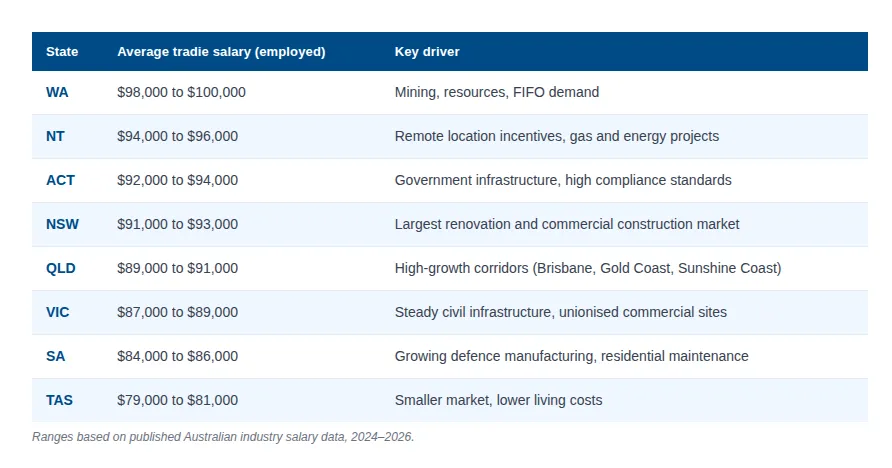
Western Australia pays the most ($98,000 to $100,000 average). Tasmania pays the least ($79,000 to $81,000).
Apprentice wages start at $15.80 to $18.20 per hour in the first year and rise to $27.20 to $29.80 per hour in the fourth year.
Average Tradie Salary by Trade
This table compares 16 trades across three measures: what you earn as an employee, what you turn over as a self-employed operator, and what you actually keep after expenses.
Trade Earnings Comparison
Trade
Employee salary range
Self-employed turnover (gross)
Typical net profit margin
Electrician
$95,000 to $97,000
$165,000 to $170,000
32 to 38%
Plumber
$94,000 to $96,000
$170,000 to $180,000
28 to 35%
HVAC / Air Conditioning
$90,000 to $95,000
$160,000 to $170,000
30 to 37%
Boilermaker / Welder
$90,000 to $113,000
$148,000 to $155,000
25 to 32%
Carpenter
$88,000 to $90,000
$155,000 to $165,000
22 to 30%
Bricklayer
$81,000 to $87,000
$145,000 to $150,000
20 to 28%
Arborist
$85,000 to $87,000
$145,000 to $150,000
25 to 35%
Roofer
$83,000 to $104,000
$138,000 to $145,000
24 to 31%
Plasterer
$82,000 to $84,000
$134,000 to $140,000
23 to 31%
Tiler
$75,000 to $80,000
$128,000 to $135,000
22 to 29%
Painter
$78,000 to $82,000
$128,000 to $135,000
25 to 33%
Glazier
$78,000 to $79,000
$124,000 to $130,000
24 to 30%
Mechanic
$75,000 to $76,000
$120,000 to $128,000
26 to 34%
Landscaper
$74,000 to $81,000
$120,000 to $125,000
18 to 28%
Fencer
$73,000 to $74,000
$115,000 to $120,000
20 to 27%
Handyman
$69,000 to $76,000
$112,000 to $118,000
30 to 40%
Salary and turnover figures are indicative ranges based on Australian market data. Actual earnings vary by location, experience, and specialisation.
Ranges based on ABS labour force data, published Australian salary platforms (SEEK, Indeed), and aggregated industry broker data, 2023-2026. Employee figures represent base salary. Self-employed turnover is gross revenue before expenses, tax, fuel, tools, and insurance. Net margins are industry estimates.
Which Trades Earn the Most?
Electricians, plumbers, and HVAC technicians consistently sit at the top across every data source. Three factors drive this:
Licensing barriers. These trades require a formal apprenticeship (3-4 years) and a state-issued licence to operate. The barrier to entry limits supply and supports higher rates.
Demand. Electrical, plumbing, and HVAC roles remain on the national skills shortage list. Every state reports unfilled positions in these trades.
Specialisation premium. Electricians who move into industrial, solar, or automation work can push well above the average. Plumbers who specialise in commercial gasfitting or medical facility plumbing command higher rates due to limited competition.
Career progression: the six-figure ceiling
If you want to move past the standard trade salary, advanced roles offer significantly higher income:
High-Earning Trade Roles
Role
Typical salary range
Path to get there
Construction Manager
$160,000 to $180,000
Certificate IV in Building and Construction + experience
Source: TAFE Gippsland 2025, published industry data.
How Much Do Tradies Earn by State?
Where you work matters. Western Australia and the Northern Territory pay the most, driven by mining, infrastructure, and remoteness loading. Tasmania pays the least, reflecting a smaller market and lower cost of living.
How Much Do Apprentice Tradies Earn?
Apprentice wages are lower than qualified rates but are rising due to a ten-year high in national demand. Unlike university, you earn while you learn and avoid study debt.
1st year: $15.80 to $18.20/hr
2nd year: $18.10 to $22.40/hr
3rd year: $23.50 to $26.70/hr
4th year: $27.20 to $29.80/hr
Ranges consistent with Fair Work national apprentice pay rates. Actual rates vary by trade, state, and employer.
What Do Self-Employed Tradies Actually Keep?
This is where the numbers get misunderstood. Self-employed tradies often quote their gross turnover, not their profit. Turning over $170,000 as a plumber does not mean you take home $170,000.
After deducting materials, fuel, tools, vehicle costs, insurance, subcontractor payments, and tax, net profit margins typically range from 18% to 38% depending on the trade.
A plumber turning over $175,000 at a 30% margin takes home approximately $52,500 in net profit. An electrician turning over $168,000 at 35% keeps approximately $58,800.
That may look lower than employee salaries, but the comparison is not straightforward. Self-employed tradies use legal business write-offs (vehicle leasing, fuel, tools, phone, home office expenses) through their ABN or company structure. These deductions reduce taxable income on paper while lowering day-to-day personal living costs. The reported net profit understates their actual financial position compared to an employee earning a similar gross figure.
What eats into the turnover
Materials and supplies. Timber, copper, plaster, and roofing materials have all risen significantly in recent years.
Fuel. Up approximately 7% in the past year.
Tool replacement and theft. Tool theft claims have increased by approximately 17% year on year across the trades insurance sector.
Insurance premiums. Public liability premiums have risen 4 to 9% on average across most trades.
The highest-earning tradies in Australia are in the mining and resources sector. Specialist heavy diesel fitters, instrumentation electricians, and coded welders in FIFO (fly-in, fly-out) roles report earnings of $160,000 to $220,000 or more per year.
These incomes come with trade-offs: demanding rosters (typically 3 weeks on, 1 week off), remote living, and consistent 12-hour shifts. They are not representative of typical metro or suburban tradie earnings.
How upcover Arranges Insurance for Tradies
As your trade business grows, protecting your income and tools from on-site risks is part of maintaining long-term profitability. upcover is a digital-first insurance broker helping Australian tradies arrange public liability, business pack, and commercial motor insurance without the paperwork or phone queues.
70,000+ businesses covered across Australia.
4.9/5 customer rating.
Instant Certificate of Currency on policy confirmation.
No long forms.
upcover Pty Ltd ABN 17 628 197 437 is a Corporate Authorised Representative (CAR 1299211) of Experience Insurance Services Pty Ltd ABN 41 657 596 506, AFSL 539078.
The average qualified tradie earns between $89,000 and $91,000 per year as an employee. Self-employed tradies turn over $120,000 to $175,000 gross but keep between 20% and 38% as net profit after expenses. The ABS reports a construction industry average of $93,704.
What is the highest paying trade in Australia?
Electricians ($95,000-$97,000 employed), plumbers ($94,000-$96,000), and HVAC technicians ($90,000-$95,000) consistently top the earnings table. For career progression, construction managers earn $160,000 to $180,000 and industrial electricians earn $150,000 to $170,000.
How much do self-employed tradies make?
Self-employed tradies turn over $120,000 to $175,000 per year on average, but this is gross revenue. After deducting materials, fuel, tools, insurance, and other business costs, net profit margins range from 18% to 38%. A plumber turning over $175,000 at a 30% margin keeps approximately $52,500.
How much do apprentice tradies earn?
Apprentice wages start at $15.80 to $18.20 per hour in the first year and rise to $27.20 to $29.80 per hour in the fourth year. Demand for apprentices is at a ten-year high across most core trades.
Do tradies earn more than university graduates?
It depends on the trade and the degree. The average qualified tradie earns $89,000 to $91,000, which is comparable to or above many graduate starting salaries. Self-employed tradies who manage their costs well can significantly exceed graduate income levels.
Are tradie insurance premiums tax deductible?
Yes. Every business insurance premium (public liability, tools, commercial motor, personal accident) is 100% tax deductible as a business operating expense under section 8-1 of the Income Tax Assessment Act 1997. Arranging or renewing before 30 June allows you to claim the deduction in the current financial year.
The information in this article is general in nature and provided for informational purposes only. It does not constitute personal financial, tax, or insurance advice. Salary ranges are indicative, derived from Australian Bureau of Statistics data (Average Weekly Earnings), published salary platforms (SEEK, Indeed), and aggregated industry broker data from 2023-2026. Self-employed turnover and net margin figures are industry estimates and not a guarantee of future earnings. Actual income depends on your trade, location, experience, business structure, and market conditions. Always confirm with a registered tax agent or financial adviser. All insurance products arranged through upcover are subject to the terms, conditions, limits and exclusions contained in the relevant policy wording and Product Disclosure Statement. Before deciding whether a particular insurance product is right for you, please read the relevant PDS and consider your personal circumstances. upcover Pty Ltd ABN 17 628 197 437 is a Corporate Authorised Representative (CAR 1299211) of Experience Insurance Services Pty Ltd ABN 41 657 596 506, AFSL 539078. upcover arranges insurance products with selected insurers and underwriters and does not compare all general insurers or insurance products available in the market.
A sole trader can have employees in Australia. business.gov.au says you can employ people under the sole trader business structure. See the PAYG, 12% super, payday super, Fair Work and workers compensation steps for your first hire.
To get public liability insurance online, request a quote, answer questions about your business, check the policy, then get your certificate of currency.
We are digitising commercial insurance and risk management for small, mid-market and technology businesses. We work with a global network of underwriters, challenging legacy brokers and delivering market leading coverage to our customers.
The information contained on this website is general advice only and has been prepared without taking into account your individual needs, objectives and financial situation. It should not be relied upon as advice. All insurance products are subject to the terms, conditions, limits and exclusions contained in the relevant policy wording and Product Disclosure Statement. Before deciding whether a particular insurance product is right for you, please consider your personal circumstances and read the relevant Product Disclosure Statement, Target Market Determination, Policy Wording, and Financial Services Guide.

.svg)



.svg)
.svg)
.svg)
%201.svg)


.svg)




.svg)


