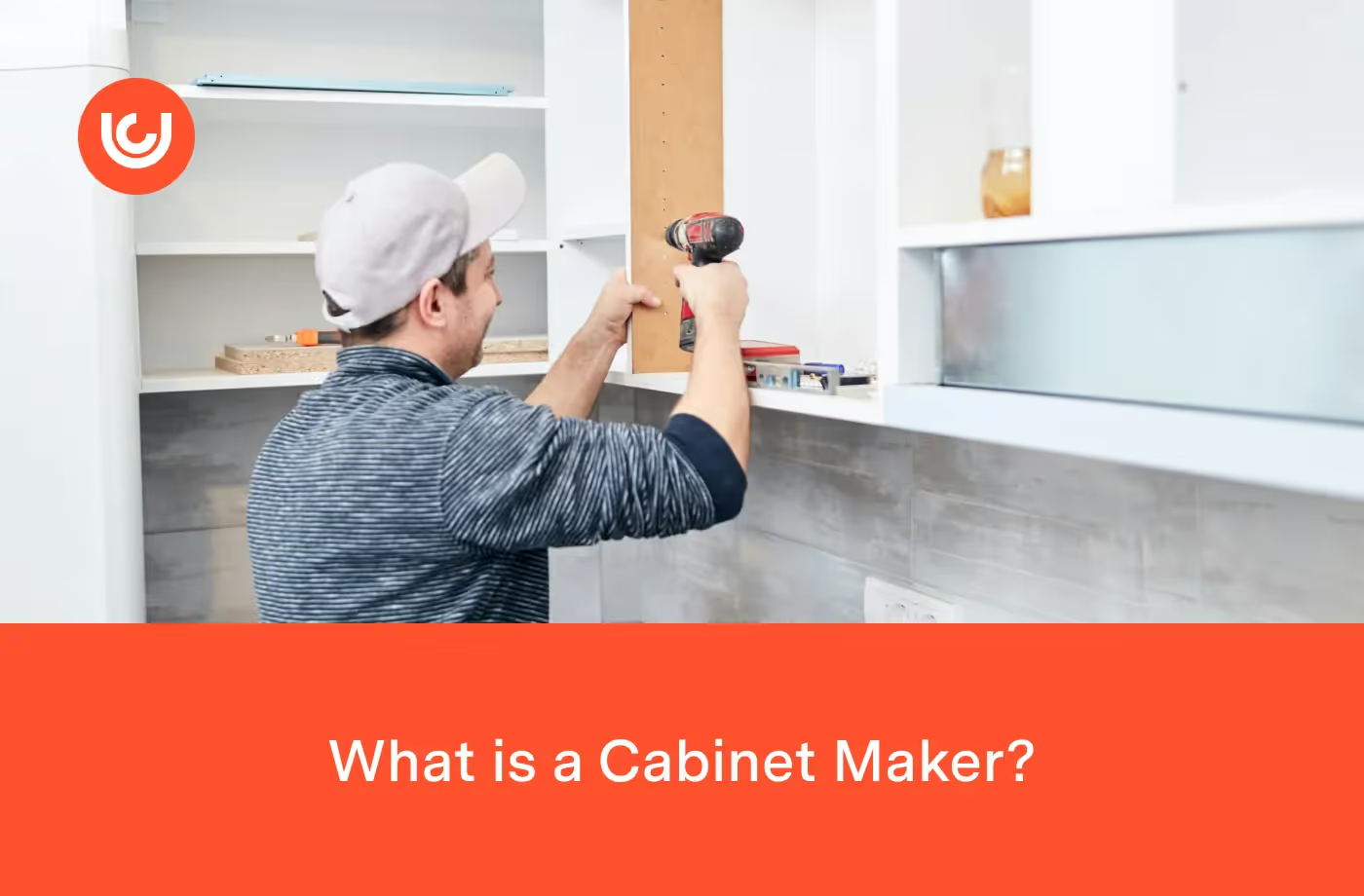
A cabinet maker designs, builds, installs, and repairs custom cabinetry, furniture, and timber fixtures for homes and businesses. Australia has around 33,100 cabinet makers, most working full-time in workshop-based roles. The median salary sits between $63,000 and $70,000 per year for qualified tradespersons, with experienced operators and business owners earning well above $80,000.
Most cabinet makers enter the trade through a 3-4 year apprenticeship with a Certificate III in Cabinet Making. If you run your own cabinet making business, you also need an ABN, public liability insurance, and products liability cover. Most builders and commercial clients will not let you on site without it.
What Does a Cabinet Maker Do?
A cabinet maker's day-to-day work sits at the intersection of design, precision woodworking, and installation. The core tasks include reading technical drawings and specifications, selecting materials (timber, veneer, particle board, laminates, engineered stone), cutting and shaping components on table saws, panel saws, and CNC routers, assembling cabinets and furniture, fitting hardware like hinges, soft-close runners, handles, and catches, and applying finishes such as stain, lacquer, or paint.
Kitchen cabinet makers specialise in designing and installing kitchen cabinetry, which typically means working alongside stone benchtop suppliers, plumbers, and electricians on site. Bathroom vanities, laundry cabinetry, wardrobes, entertainment units, and commercial fitouts (offices, retail, hospitality) are all common projects.
The split between workshop and site work varies. Some cabinet makers spend 80% of their time in the workshop building components and 20% on site installing. Others, particularly those doing kitchen and bathroom renovations, spend closer to 50/50.
Cabinet Maker vs Carpenter vs Joiner
There is significant overlap. Many cabinet makers also do joinery work, and some carpenters do basic cabinetry. The distinction matters for insurance because when you get a quote, your insurer asks what you do for a living. The occupation you select determines your premium and what work your policy covers. If you are quoted as a carpenter but do cabinet making installation work, your policy may not respond to a claim.
Cabinet Maker vs Carpenter vs Joiner
| Factor |
Cabinet maker |
Carpenter |
Joiner |
| Focus |
Custom cabinetry, furniture, kitchens, bathrooms |
Structural framing, roofing, formwork, decking |
Doors, windows, staircases, mouldings |
| Workspace |
Primarily workshop |
Primarily building site |
Primarily workshop |
| Scale |
Precision, fine detail, millimetre tolerances |
Larger structural elements |
Mid-scale architectural timber |
| Qualification |
Cert III Cabinet Making and Timber Technology (MSF30322) |
Cert III Carpentry (CPC30220) |
Cert III Joinery pathway |
| Typical clients |
Homeowners, builders, interior designers, commercial fitout companies |
Builders, developers, construction companies |
Builders, architects, heritage restoration |
Cabinet Maker Salary in Australia
- Apprentice / entry level cabinet maker(0–3 years): $42,000 to $50,000
- Qualified cabinet maker (4–9 years): $58,000 to $72,000
- Experienced / foreman (10+ years): $80,000 to $100,000+
- Self-employed / business cabinet maker: Turnover $100,000 to $250,000+ (net varies after materials, workshop costs, and insurance)
Ranges based on Australian market data from Jobs and Skills Australia, PayScale, Jobted, and Construction Pathways (CSQ), 2024-2026.
Self-employed income looks higher on paper, but a large portion goes to materials, workshop rent, equipment, and insurance before you pay yourself. A cabinet maker turning over $200,000 might net $80,000-$120,000 depending on the type of work and overhead.
The median hourly rate for a full-time cabinet maker is $31 per hour (ABS data). Entry-level rates start around $21 per hour. Victoria has the highest share of cabinet makers at 28.2% of the national workforce, followed by Queensland at 23.9% and New South Wales at 23.7%. Wages tend to be highest in metro areas and on commercial fitout projects where deadlines are tight and the work is detail-intensive.
Starting Your Own Cabinet Making Business
Most career guides stop at "get qualified." But a large number of cabinet makers eventually go self-employed, either subcontracting to builders or taking direct clients. Here is what that involves.
Business registration:
- ABN (free, register at abr.gov.au). See upcover's ABN guide.
- Business name (optional, $45/yr through ASIC)
- GST registration if turnover exceeds $75,000
Workshop setup:
- Lease: $300-$800/week depending on location and size
- Core machinery (table saw, panel saw, edge bander, dust extraction): $10,000-$30,000 to start
- CNC router (if scaling to commercial work): $20,000-$80,000+
- Hand and power tools: $2,000-$5,000
How most cabinet makers start: subcontracting to builders and kitchen companies. This builds your portfolio, keeps cash flow steady, and avoids the overhead of marketing directly to homeowners while you establish your reputation. Once you have a body of work and referral network, direct-to-client work becomes viable.
What Insurance Do Cabinet Makers Need?
If you run your own cabinet making business, insurance is not optional in practice. Most builders, head contractors, and commercial clients require proof of public liability before you start work on their site. Procurement portals like Cm3 and Felix (contractor approval platforms that builders use to vet subcontractors before letting them on site) check your insurance as part of their approval process.
Cabinet Maker Insurance Types
| Insurance type |
Why a cabinet maker needs it |
Scenario |
| Public Liability |
Covers third-party injury and property damage at client sites and in your workshop. Required by most builders before you step on site. |
You are installing kitchen cabinets and your drill slips, cracking the client's $4,000 stone benchtop. |
| Products Liability |
Covers claims from products you make and sell. If cabinetry you built fails or injures someone after handover, products liability may respond, subject to policy terms. |
A wall-mounted cabinet you installed detaches six months later and falls, injuring a child. |
| Tools of Trade |
Covers theft, loss, or damage to your tools and portable equipment, both in the workshop and on site. |
Your van is broken into overnight and $8,000 worth of power tools and measuring equipment are stolen. |
| Commercial Motor |
Covers your work vehicle for delivery and installation runs. |
You reverse your van into a client's garage door while unloading cabinets for installation. |
| Workers' Compensation |
Mandatory if you employ anyone, including apprentices. State-based schemes. |
Your apprentice injures their hand on a table saw. Workers' comp covers their medical costs and lost wages. |
Cover levels: most builders require $10 million to $20 million public liability. Commercial fitout tenders routinely specify $20 million as a minimum. If you only hold $5 million, you may be locked out of larger projects.
What PL does not cover: the cost of redoing your own defective work. If a cabinet you installed is faulty, your insurer will not pay to replace it. But if that faulty cabinet causes damage to other property (for example, it falls and damages the floor or injures someone), the resulting damage may be covered, subject to policy terms.
Cost: PL and products liability for a sole trader cabinet maker typically costs $40 to $120 per month depending on your turnover and cover level. For a full breakdown, see upcover's guide on how much does business insurance cost.
How upcover Arranges Insurance for Cabinet Makers
upcover is a digital-first insurance broker helping Australian tradespeople and small businesses arrange public and products liability, business pack, and tools of trade insurance without the paperwork or phone queues. upcover arranges cover for cabinet makers, joiners, carpenters, and other trades and construction businesses across Australia, with access to 80+ insurance partners.
- 70,000+ businesses covered across Australia.
- 4.9/5 customer rating.
- Instant Certificate of Currency on policy confirmation.
upcover Pty Ltd ABN 17 628 197 437 is a Corporate Authorised Representative (CAR 1299211) of Experience Insurance Services Pty Ltd ABN 41 657 596 506, AFSL 539078.
FAQ
What is a cabinet maker?
A cabinet maker is a tradesperson who designs, builds, installs, and repairs custom cabinetry, furniture, and timber fixtures. They work with materials including timber, veneer, particle board, and laminates, using both hand tools and machinery like table saws, panel saws, and CNC routers.
What does a cabinet maker do day to day?
Read technical drawings, select materials, cut and shape timber components, assemble cabinets and furniture, fit hardware (hinges, soft-close runners, handles), apply finishes, and install completed work on site. Kitchen cabinet makers specialise in kitchen and bathroom cabinetry, working alongside plumbers, electricians, and stone suppliers.
How do I become a cabinet maker in Australia?
Complete a Certificate III in Cabinet Making and Timber Technology (MSF30322) through a 3-4 year apprenticeship at a TAFE or registered training organisation. You need a White Card for any construction site work. You can choose a kitchen/bathroom or furniture pathway.
How much does a cabinet maker earn in Australia?
Apprentices earn $42,000 to $50,000 per year. Qualified tradespersons earn $58,000 to $72,000. Experienced cabinet makers and foremen earn $80,000 to $100,000+. Self-employed business owners can turn over $100,000 to $250,000+, though net income depends on materials, workshop costs, and insurance.
What is the difference between a cabinet maker and a carpenter?
Cabinet makers do precision woodworking in workshops, building custom cabinetry, furniture, and kitchen installations. Carpenters do larger-scale structural work on building sites, including framing, roofing, and formwork. Both work with wood but at different scales and precision levels. The distinction also affects your insurance occupation code.
Do cabinet makers need public liability insurance?
If you run your own cabinet making business, yes. Most builders, head contractors, and commercial clients require $10 million to $20 million in public liability before you can work on their site. Products liability is also recommended because cabinetry you build and install can cause injury or property damage after handover.
The information in this article is general in nature and provided for informational purposes only. It does not constitute personal career, financial, or insurance advice. Salary ranges are indicative only, based on published Australian market data from government and industry sources during 2024-2026, and are not a guarantee of earnings. Always confirm qualification requirements with your TAFE, RTO, or industry body. All insurance products arranged through upcover are subject to the terms, conditions, limits and exclusions contained in the relevant policy wording and Product Disclosure Statement. Before deciding whether a particular insurance product is right for you, please read the relevant PDS and consider your personal circumstances. upcover Pty Ltd ABN 17 628 197 437 is a Corporate Authorised Representative (CAR 1299211) of Experience Insurance Services Pty Ltd ABN 41 657 596 506, AFSL 539078. upcover arranges insurance products with selected insurers and underwriters and does not compare all general insurers or insurance products available in the market.

.svg)



.svg)
.svg)
.svg)
%201.svg)


.svg)






.svg)


