Fitness and sports professionals manage risk every session. A personal trainer checks form before adding weight. A gym owner keeps walkways clear. A Pilates instructor modifies a movement for a client with a sore back. A sports coach checks the oval before running drills. But claims still happen. A client gets hurt. A training program is blamed for an injury. Equipment damages a venue. A studio floods. A staff member is injured setting up.
This guide covers five common fitness business insurance claims, which cover may respond, and how to reduce the risk. It is written for personal trainers, gym owners, fitness instructors, sports coaches, yoga and Pilates instructors, bootcamp operators, mobile trainers, and small studio owners.
At a Glance
- Fitness business claims usually involve client injuries, training advice, property damage, business interruption, or staff injuries.
- Public and products liability may help with third-party injury or property damage claims.
- Professional indemnity may help with claims about advice, instruction, programming, or coaching.
- Independent contractors should not assume a gym, studio, or club policy automatically covers their own work.
- Cover depends on policy wording, limits, exclusions, and insurer appetite.
The 5 Most Common Claims
| # |
Claim type |
What happens |
Cover to check |
| 1 |
Client or bystander injury |
Someone is hurt during a session or at the premises |
Public and products liability |
| 2 |
Coaching or training advice claim |
A client alleges your program or instruction caused harm |
Professional indemnity |
| 3 |
Property or equipment damage |
Your equipment damages a venue, or your own gear is stolen |
Public and products liability; equipment cover or business pack |
| 4 |
Business interruption |
A fire, storm, or flood forces a gym or studio to close |
Business interruption cover, often through business pack |
| 5 |
Staff injury |
An employee is hurt demonstrating, lifting, or setting up |
Workers compensation, if you employ staff |
Workers compensation rules differ by state and territory, and requirements depend on your worker arrangements.
Claim 1: A Client Is Injured During a Session
This is one of the most common claim types in fitness and sports businesses.
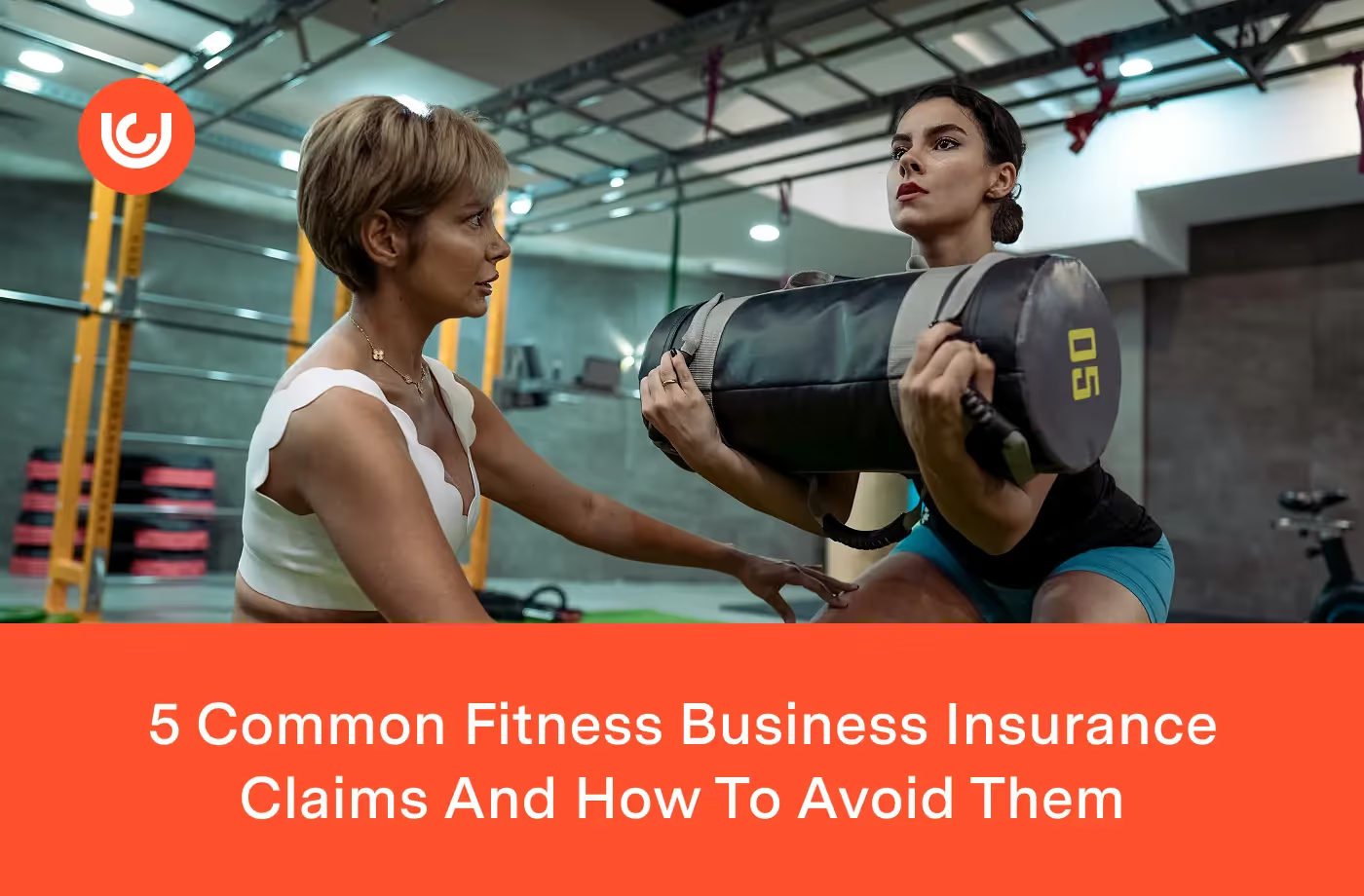
A gym member slips on wet flooring. A personal training client strains their back during a deadlift. A bootcamp participant trips during shuttle runs. A parent watching a junior sports session trips over agility cones and fractures their wrist.
Public and products liability may be relevant if a third party claims they were injured because of your business activities, subject to policy terms.
The gym vs contractor trap. If an independent personal trainer works from a gym, the claim may not be as simple as "the gym is responsible" or "the trainer is responsible." A client may allege the gym failed to maintain the space and the trainer failed to supervise properly. Both parties may be drawn into the dispute. Independent trainers should check whether the facility's policy covers them, and whether they need their own public liability cover.
How to reduce the risk?
Screening clients before programming, asking about injuries and limitations, supervising technique closely, and keeping walkways and equipment clear are the simplest ways to reduce this type of claim.
Claim 2: A Client Blames Your Training Program or Coaching Advice
Fitness and sports professionals do more than supervise movement. They give advice. That advice might be a strength program, a return-to-training plan, a technique correction, a conditioning plan, or an online workout program.
A claim may arise if a client alleges the advice caused harm. A personal training client may say a program was too advanced. A sports conditioning coach may design a plyometric plan for a returning footballer, and the athlete may claim the plan caused a chronic injury. An online coaching client may allege a program was unsafe or not properly explained.
Professional indemnity may help where a client alleges your professional advice, instruction, or program design caused harm or loss, subject to the policy.
This claim type is particularly relevant for sports coaches who design conditioning, performance, or mental performance programs. Coaching advice that pushes an athlete too hard, recommends a premature return to play, or fails to account for an existing condition can result in a professional indemnity claim, not a public liability claim. For a dedicated guide, see Sports Coach Insurance in Australia.
How to reduce the risk?
Staying within your scope, documenting programming decisions, recording client modifications, and referring clients to health professionals when needed all help reduce this type of claim.
Claim 3: Equipment Damages a Venue, or Your Gear Is Stolen
Fitness businesses rely on expensive gear and shared spaces. A kettlebell damages a studio floor. A resistance band snaps and cracks a mirror. A mobile trainer's equipment scratches a client's wall. A sports coach's timing gates damage a hired council facility.
Public and products liability may help with third-party property damage connected to your business activities, subject to the policy. But public liability generally does not cover your own gear.
If your own equipment is stolen, lost, or damaged, you may need equipment cover, tools cover, or a business pack extension. This applies to weights, mats, reformer equipment, timing gates, tablets, and portable training gear.
How to reduce the risk?
Inspecting the space before sessions, using equipment as intended, following venue rules, and keeping equipment records and receipts are practical ways to reduce property damage claims and support any equipment cover claim you may need to make.
Claim 4: A Gym or Studio Has to Close After a Property Event
A fitness business can lose income without a single client claim.
A fire damages a studio. A storm makes the roof unsafe. A burst pipe floods the flooring and destroys equipment. Repairs take two weeks. The business loses revenue while still paying rent, wages, subscriptions, and leases.
Business interruption cover, usually included in a business pack policy, may help replace lost income or pay extra expenses if an insured event forces the business to close or reduce trading, subject to policy terms. This cover responds to insured property events, not quiet months or cancelled classes.
How to reduce the risk?
Keeping accurate income records, backing up booking and payment systems, maintaining premises, and having a backup plan for temporary sessions all help the business recover faster when an interruption event occurs.
Claim 5: A Trainer or Staff Member Gets Injured at Work
Fitness work is physically demanding for staff, not just clients.
A trainer injures their back demonstrating an exercise. A front-desk employee slips while cleaning. An instructor strains their shoulder moving equipment. A coach is injured setting up a group session.
If a fitness business employs staff, workers compensation requirements may apply. Rules differ by state and territory, but cover generally helps employees who are injured or become ill because of work.
This is different from personal accident and sickness cover. Workers compensation is for employees. Personal accident and sickness cover may be relevant for sole traders, contractors, and self-employed fitness professionals who do not have paid sick leave or workers compensation for themselves.
How to reduce the risk?
Safe manual handling procedures, staff training on equipment setup, clear floors, and documented hazard reporting all help reduce workplace injuries before they become claims.
What Insurance Should Fitness Professionals Check?
How upcover Can Help
upcover arranges insurance for eligible sports and fitness professionals across Australia, including personal trainers, fitness instructors, sports coaches, mobile trainers, and small fitness businesses. Depending on your occupation and activities, upcover may help arrange cover for client injury, professional advice, property damage, equipment, staff injury, and other business risks.
upcover also arranges dedicated sports coach insurance for coaches delivering training, instruction, and supervision across team and individual sports.
upcover Pty Ltd ABN 17 628 197 437 is a Corporate Authorised Representative (CAR 1299211) of Experience Insurance Services Pty Ltd ABN 41 657 596 506, AFSL 539078.
FAQ
What are common fitness business insurance claims?
Client injuries, coaching or programming advice claims, property damage, equipment theft, business interruption from property events, and staff injuries.
Does public liability cover client injuries during training?
Public and products liability may help with third-party injury claims from your business activities. If the allegation involves your advice or programming, professional indemnity may also be relevant.
Can a sports coach be sued for a training program?
Yes. If an athlete alleges a conditioning plan, return-to-play recommendation, or coaching instruction caused harm, a professional indemnity claim may arise. See Sports Coach Insurance in Australia.
Does the gym's insurance cover independent trainers?
Not automatically. Independent personal trainers and contractors should check whether the facility's policy covers their work, and whether they need their own public liability and professional indemnity cover.
Does business interruption cover a gym or studio closure?
Business interruption may help replace lost income or pay extra expenses if an insured event, such as fire, storm, or water damage, forces the business to close or reduce trading. Cover depends on the policy wording, waiting periods, and exclusions.
Do fitness businesses need workers compensation?
If the business employs staff, workers compensation requirements may apply. Rules differ by state and territory. Sole traders and self-employed professionals may need personal accident and sickness cover for their own income risk.
The information in this article is general in nature and provided for informational purposes only. It does not constitute personal insurance, legal, or professional advice. It does not take into account your objectives, financial situation, or needs. Insurance requirements vary by occupation, business activities, venue, state, territory, and contract. Cover depends on the policy wording, limits, exclusions, and insurer appetite. Before purchasing or relying on an insurance product, consider the relevant PDS, Target Market Determination, policy wording, and Financial Services Guide. upcover Pty Ltd ABN 17 628 197 437 is a Corporate Authorised Representative (CAR 1299211) of Experience Insurance Services Pty Ltd ABN 41 657 596 506, AFSL 539078. upcover arranges insurance products with selected insurers and underwriters and does not compare all general insurers or insurance products available in the market.

.svg)



.svg)
.svg)
.svg)
%201.svg)


.svg)






.svg)


