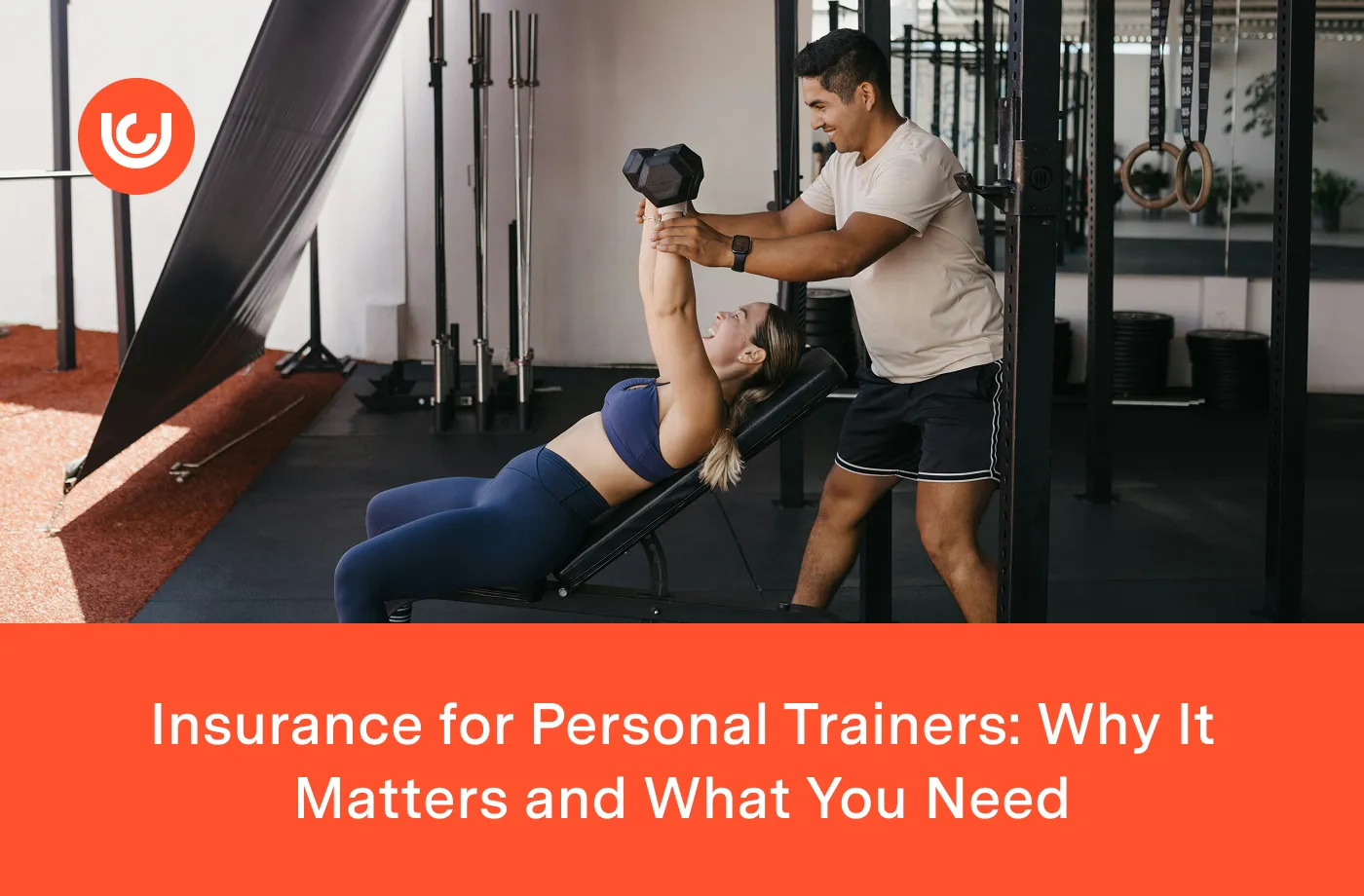
Personal trainers work in an environment where client injuries, equipment accidents, and claims of professional negligence are genuine and frequent risks. A single incident, whether an injury during a session, a client alleging incorrect programming, or property damaged during a home visit, can result in legal claims that carry significant financial consequences without the right insurance in place.
This guide covers the types of insurance personal trainers need, the most common coverage gap trainers overlook, what your policy needs to cover based on where you train, and what it typically costs in Australia.
What Is Fitness Insurance?
Fitness insurance is a category of professional insurance that covers personal trainers, fitness instructors, and other exercise professionals against the specific risks of their work. It may include cover for:
- Client injuries during a training session.
- Equipment accidents, including dropped weights or faulty gear.
- Claims of professional negligence, such as incorrect programming or exercise prescription.
- Property damage during home visits or at third-party facilities.
Whether you train in a gym, a park, a studio, or online, fitness insurance may help protect against these risks, subject to policy terms and conditions.
Personal Trainer Insurance: What It May Cover for 1:1 Training
For personal trainers delivering customised fitness programs to individual clients, insurance may include cover for:
- Slips and falls during a session.
- Injuries that occur while using equipment.
- Claims of inappropriate exercise prescriptions.
- Professional negligence, including failure to warn a client of health risks relevant to their medical history.
Having appropriate insurance allows you to focus on your clients rather than on the financial consequences of an unexpected claim.
For a detailed breakdown of how public liability insurance applies to personal trainers and when it responds to a claim, read our dedicated guide to public liability insurance for personal trainers.
For the full picture on professional indemnity for personal trainers, including what triggers a claim and how it responds, read our guide to professional indemnity insurance for personal trainers.
Fitness Instructor Insurance: Group and Class Settings
Group fitness environments carry specific risks that 1:1 training does not. Leading a class of ten to thirty people means less individual attention per participant, higher equipment usage, and more variables that can result in injury or a claim.
Risks specific to group and class settings include:
- Miscommunication during large sessions where instructions are misheard or misapplied.
- Clients pushing beyond safe limits under supervision.
- Allegations of improper technique guidance when multiple participants are being monitored simultaneously.
Fitness instructor insurance may help protect instructors against liability for these incidents, subject to policy terms and conditions.
Personal Trainer Liability Insurance: The Two Core Covers
Personal trainer liability insurance addresses two distinct types of legal risk. Most combined policies available in Australia include both.
Public liability insurance may help protect against claims if a third party is injured or their property is damaged due to your business activities, subject to policy terms. This is the most common type of claim for personal trainers and the most frequently required by gyms, councils, and facilities before you can operate.
Professional indemnity insurance may help protect against claims that your professional advice or instruction caused a client harm or financial loss, subject to policy terms. A client who sustains an injury attributed to your programming, or a family that alleges your instructions contributed to a health deterioration, would trigger a professional indemnity claim.
Both are needed. A physical injury in a session can generate either type of claim depending on how the client frames it. Public liability alone does not cover professional advice claims.
Does the Gym's Insurance Cover You? The Gap Most Trainers Miss
This is the most common misconception among personal trainers in Australia. Many trainers working at a gym or studio assume the facility's insurance policy covers them. Almost all commercial gyms and studios require personal trainers to hold their own insurance before they can operate on the premises. The gym's policy covers the gym, not you as an individual trainer.
As a sole trader or contractor working at a gym, you are not typically an employee of that gym. The gym's public liability policy covers claims arising from their operations, not yours. If a client is injured during your session and makes a claim, you may be the named defendant regardless of whose premises the session took place on.
If a gym tells you that you are covered under their policy, ask them to confirm this in writing and specify that the cover extends to your individual professional activities as a contractor. If they cannot confirm this in writing, arrange your own cover before your next session.
Council permits and outdoor sessions
If you run bootcamps or personal training sessions in a council park or public space, most local councils in Australia require proof of public liability insurance before granting a permit to use that space commercially. This is a practical requirement that affects outdoor trainers directly. upcover arranges insurance that may include cover for outdoor sessions, subject to policy terms.
Where You Train and What Your Policy Needs to Cover
A standard personal trainer insurance policy covers sessions at a single nominated location. If you train clients across multiple settings, your policy needs to reflect that. Subject to policy terms, upcover arranges personal trainer insurance that may include cover for:
- Outdoor bootcamps and park sessions.
- Online and virtual training sessions.
- Sessions in the client's home.
- Your own home-based gym or studio.
- Commercial gyms and fitness facilities.
The key is confirming with your insurer that all the settings in which you work are included. An incident that occurs in a setting not listed on your policy may not be covered. If your training locations change or expand, update your policy accordingly.
For online personal trainers, the risk profile is different but still real. Professional indemnity applies to advice and programming provided online in the same way it applies in person. If you handle client health information, payment details, or personal data digitally, cyber insurance is also worth considering.
Industry Body Registration and Insurance Requirements
Australia's three main fitness industry bodies are AUSactive (formerly Fitness Australia and REPS), FITREC, and Physical Activity Australia. All three recommend or require insurance as part of professional membership and registration.
AUSactive registration is required or expected by many commercial gym chains, councils, and fitness facilities before they will engage a trainer. Most require both AUSactive registration and current insurance documentation. FITREC and Physical Activity Australia have similar expectations for their registered members.
If you plan to work across multiple venues, access council-managed outdoor spaces, or build a professional client base in Australia's fitness industry, holding both registration with an industry body and current insurance is the standard expectation. Neither alone is sufficient for most professional arrangements.
Fitness Trainer Insurance Cost: What to Expect
Fitness trainer insurance in Australia typically ranges from $150 to $600 per year for a combined public liability and professional indemnity package, depending on:
- The scope of services, whether group classes, 1:1 training, or specialised programs such as rehabilitation or prenatal training.
- Whether sessions are in-person, virtual, or across multiple settings.
- The size of your client base and annual revenue.
- Your business structure, whether sole trader, contractor, or gym owner.
- The coverage limits selected, with $5 to $10 million public liability and $2 to $5 million professional indemnity being industry benchmarks.
Some insurers offer monthly payment options. It is also worth checking whether your professional body membership includes a group insurance arrangement, and if so, what it covers and whether it meets the requirements of the gyms and facilities you work with.
Illustrative scenario
A personal trainer runs a boot camp in a public park. A client trips on uneven ground and breaks their wrist. Even if the trainer followed all safe practices, a public liability policy may help cover the legal costs and any compensation awarded, subject to the terms of the policy. Outcomes depend entirely on the individual policy wording.
Related: What allied health practitioners get wrong about their insurance
Insurance Checklist for Personal Trainers
The following cover types are most commonly held by personal trainers and fitness professionals in Australia.
- Public liability insurance: May cover third-party injury or property damage claims. Required by most gyms, councils, and outdoor spaces, subject to policy terms.
- Professional indemnity insurance: May cover claims of negligence, poor programming, or inadequate advice that caused client harm, subject to policy terms.
- Equipment insurance.:May cover loss, theft, or damage to training equipment you own and use with clients, subject to policy terms.
- Personal accident insurance: May provide income support if you are injured and cannot work, subject to policy terms. Particularly relevant for sole traders without workers compensation.
- Cyber liability insurance: May cover data breach costs and digital security incidents if you store client information or run online sessions, subject to policy terms.
upcover arranges personal trainer insurance for sole traders, gym contractors, and fitness professionals across Australia. Cover may include professional indemnity, public liability, and products liability, with policies that cover multiple training settings. Instant Certificate of Currency on policy confirmation.
Related: Allied Health Professionals Insurance at upcover
About upcover
upcover is a digital-first insurance broker helping Australian personal trainers and fitness professionals arrange the right insurance instantly online. upcover arranges professional indemnity, public liability, and products liability insurance for personal trainers, fitness instructors, gym owners, pilates instructors, yoga teachers, dietitians, nutritionists, and 300+ other fitness and allied health occupations.
- 70,000+ businesses covered across Australia.
- 4.9/5 customer rating.
- Instant Certificate of Currency on policy confirmation.
- Cover for gym-based, outdoor, online, and home-based trainers.
upcover is a Corporate Authorised Representative (CAR 1299211) of Experience Insurance Services Pty Ltd ABN 41 657 596 506, AFSL 539078.
Frequently Asked Questions
Does a personal trainer need their own insurance if they work at a gym?
Yes. Almost all commercial gyms and fitness studios in Australia require personal trainers to hold their own insurance before operating on their premises. The gym's policy covers the gym's operations, not an individual contractor's professional activities. If a client makes a claim against you arising from your session, you are typically the named party regardless of whose premises you trained on. Always confirm in writing whether a gym's policy covers you before relying on it.
What insurance do personal trainers need in Australia?
Personal trainers in Australia typically need public liability insurance, which may cover third-party injury and property damage claims, and professional indemnity insurance, which may cover claims arising from negligent advice or programming. Both are required by most gyms, councils, and fitness facilities as a condition of engagement. Personal accident insurance is also worth considering for sole traders who cannot access workers compensation through an employer.
Does personal trainer insurance cover outdoor sessions?
Subject to policy terms, personal trainer insurance can cover outdoor sessions including park bootcamps, beach training, and outdoor group classes. Some councils require proof of public liability insurance before granting a permit to use a public space commercially. Confirm with your insurer that outdoor locations are included in your policy. upcover arranges insurance that may include outdoor session cover, subject to policy terms.
Does personal trainer insurance cover online training sessions?
Subject to policy terms, yes. Professional indemnity insurance applies to advice and programming delivered online in the same way it applies in person. If you provide programming, nutrition advice, or coaching via video call or a digital platform, professional indemnity cover is relevant. If you handle client health data digitally, cyber insurance is also worth considering alongside your standard fitness insurance.
How much does personal trainer insurance cost in Australia?
A combined public liability and professional indemnity package for personal trainers in Australia typically ranges from $150 to $600 per year depending on services, revenue, locations, and cover limits. Industry benchmarks are $5 to $10 million public liability and $2 to $5 million professional indemnity. upcover arranges instant online quotes for personal trainers and fitness professionals across Australia.
What are AUSactive, FITREC, and Physical Activity Australia and do they require insurance?
AUSactive, FITREC, and Physical Activity Australia are Australia's three main fitness industry registration bodies. All three recommend or require insurance as part of professional membership. Most commercial gyms, councils, and fitness facilities expect personal trainers to hold both registration with an industry body and current insurance documentation before engagement.
The information in this article is general in nature and provided for informational purposes only. It does not constitute personal advice on the insurance products or coverage levels you should arrange. The insurance information has been prepared without taking into account your individual needs, objectives or financial situation. It should not be relied upon as personal advice. Illustrative scenarios are provided for informational purposes only and do not represent guaranteed coverage outcomes. Coverage depends entirely on the terms of the individual policy. All insurance products arranged through upcover are subject to the terms, conditions, limits and exclusions contained in the relevant policy wording and Product Disclosure Statement. Before deciding whether a particular insurance product is right for you, please read the relevant PDS and consider your personal circumstances. upcover Pty Ltd ABN 17 628 197 437 is a Corporate Authorised Representative (CAR 1299211) of Experience Insurance Services Pty Ltd ABN 41 657 596 506, AFSL 539078. upcover arranges insurance products with selected insurers and underwriters and does not compare all general insurers or insurance products available in the market.

.svg)



.svg)
.svg)
.svg)
%201.svg)


.svg)






.svg)


