When a work ute is written off in a car park, the repair bill is only part of the cost. Every job that vehicle was booked for still needs doing, and the business absorbs the gap. That is the exposure this cover is built around.
The terminology is where most businesses get stuck. Commercial motor, fleet insurance, commercial vehicle insurance and CTP sound interchangeable, but they are not.
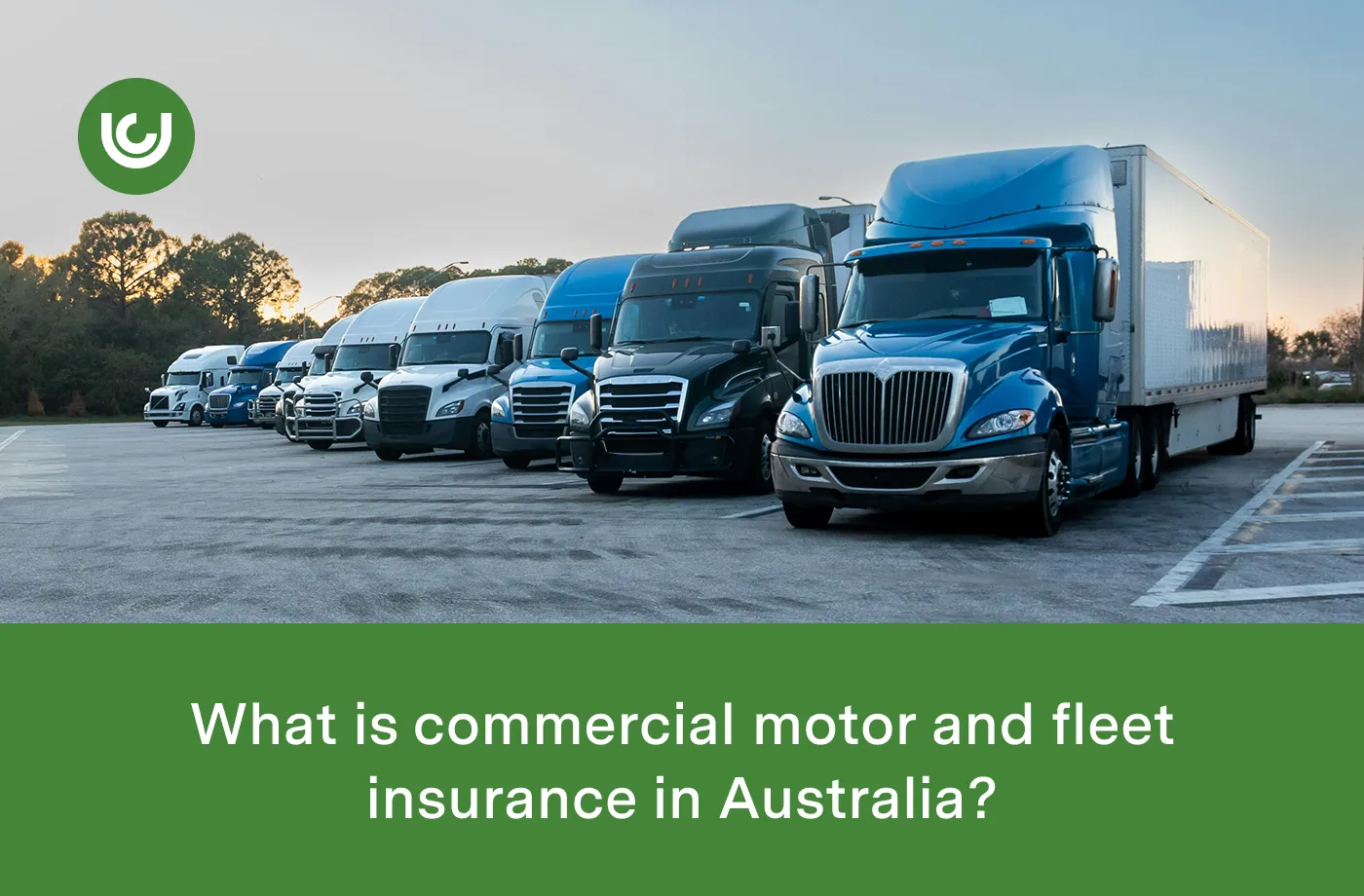
What is commercial motor and fleet insurance in Australia?
Commercial motor insurance may cover vehicles used for business against accidental damage, theft, fire and third-party property damage, and it applies to vehicles used for business purposes rather than personal driving. Fleet insurance is the same cover arranged for multiple vehicles, commonly placed on one schedule. Some insurers and brokers use "commercial vehicle insurance" for the same product, though terminology differs between wordings. Compulsory third party (CTP) insurance is separate and mandatory, arranged through vehicle registration, and it covers injury to people rather than vehicles or property.
upcover arranges commercial motor and fleet insurance for eligible Australian businesses as a Corporate Authorised Representative of an AFSL holder.
Commercial motor, fleet, truck and CTP: what is the difference?
| Term |
What it means in practice |
| Commercial motor insurance |
Cover for one or more vehicles used for business purposes. Also called commercial vehicle insurance. |
| Multi-vehicle arrangement |
Several vehicles insured together, often individually rated, commonly sharing one renewal. |
| Fleet insurance |
A commercial motor arrangement covering multiple vehicles together, commonly on one schedule. |
| Truck or heavy motor insurance |
Commercial motor cover for trucks, prime movers and heavy rigid vehicles, often underwritten with tailored wording. |
| Personal car insurance with business use |
A personal policy where limited business use has been declared and accepted. Scope is narrower than a commercial motor. |
| CTP (compulsory third party) |
Mandatory injury cover arranged through vehicle registration. Administration and scheme rules differ by state and territory. |
| Goods in transit or marine cargo |
Cover for the goods being carried, not the vehicle carrying them. |
Swipe left or right to see the full table.
Truck insurance versus motor fleet insurance is the comparison businesses ask about most. A fleet arrangement consolidates multiple vehicles, which may include light trucks, on one schedule. Truck or heavy motor cover is written for heavier vehicles, often with tailored terms and different underwriting. Whether heavy and light vehicles can share a schedule depends on the insurer's appetite.
Who needs commercial motor or fleet insurance?
Businesses using vehicles regularly for work, rather than personal driving alone, may need commercial motor cover.
- Trades and construction. Utes and vans carrying tools and materials between sites. See trades and construction insurance.
- Mobile service businesses. Cleaners, mobile mechanics, groomers and technicians travelling to clients.
- Sales and consulting businesses. Company cars for client visits, often lower kilometres but still business use.
- Couriers and delivery businesses. See fleet insurance for couriers and delivery drivers.
- Own-goods operators. Retail, wholesale and food businesses delivering their own stock.
- Transport and haulage operators. Trucks and heavy vehicles, commonly with specialist placement.
Is personal car insurance enough for business use?
Personal car insurance is written for social, domestic and pleasure use. Some personal policies allow limited business use where it has been declared and accepted, but the scope is narrower than commercial motor cover. Once a vehicle regularly carries tools, makes deliveries, visits worksites or is driven by employees, commercial motor cover may be more appropriate. For individual drivers doing paid delivery work, see delivery driver insurance in Australia. Either way, disclose the vehicle use when cover is arranged, and again if it changes.
How does fleet insurance work in Australia?
Fleet insurance is commonly structured as commercial motor cover for multiple vehicles, rather than a different product. Four things change.
Consolidated administration. Vehicles sit on a single schedule with one renewal date and one point of contact for claims. Cover levels can differ between vehicles, so a newer ute might sit on comprehensive while an older runabout sits on third party property damage.
Vehicle and driver information. Each vehicle is listed with make, model, year, registration and value. Drivers are either named individually or covered under an any-authorised-driver provision. Age or experience restrictions and additional excesses often apply to younger drivers.
Mid-term changes. Where automatic additions are included, a newly acquired vehicle may be covered from purchase provided the insurer is notified within the set period. How the premium is then adjusted differs from one policy to the next.
Rating approach. Smaller groups are rated vehicle by vehicle. Once a fleet reaches a certain size, its own claims record and risk controls start to matter more than the standard rate for each vehicle type.
None of this is standardised. Whether a policy offers a single claims contact, allows different cover levels across vehicles, includes an any-authorised-driver provision or provides automatic additions depends on the insurer and the wording. Check the schedule rather than assuming.
How many vehicles count as a fleet?
There is no industry-standard number, and published guidance from Australian insurers and brokers genuinely disagrees. Some describe fleet arrangements from around two to five vehicles. Others put the threshold between eight and fifteen. Some specialist fleet products are marketed at businesses with fifteen or more. The only reliable answer is the one the insurer you are dealing with gives.
So the number matters less than two things: whether an insurer will group your particular vehicle mix, and whether juggling separate renewals, certificates and claims contacts has started costing you time. The bands below are examples of how the market approaches it, not fixed rules.
- One vehicle. A single commercial motor policy. Fleet rating does not apply. Check any financier requirements and how a total loss would be settled.
- A small number of vehicles. Ask about multi-vehicle or small-fleet arrangements. The benefit at this size is often administrative before it is financial.
- Larger vehicle groups. Specialist placement becomes more relevant, where claims experience and risk management evidence such as driver training records, telematics data and maintenance schedules may carry more weight. Excess structures may be negotiable. See upcover's motor fleet pathway.
- Trucks or heavy vehicles. Heavy motor may need separate or tailored placement. See trucking and haulage.
- Courier or delivery vehicles. Declare the delivery use, and check whether the parcels need separate goods in transit cover.
Not sure which arrangement fits? Compare commercial motor and fleet options through upcover based on your vehicles, use and drivers.
What cover levels are available for commercial motor insurance?
Three levels are commonly offered, though availability depends on the insurer and the vehicle:
Comprehensive. The broadest option. May cover damage to your own vehicle from collision, theft, fire, storm and hail, plus third-party property damage.
Third party fire and theft. Third-party property damage plus fire and theft of your own vehicle. Does not cover collision or storm damage to your own vehicle.
Third party property damage. Damage you cause to someone else's vehicle or property. Does not cover your own vehicle.
For each inclusion, exclusion and available extension explained with examples, see what does commercial motor insurance cover in Australia.
What does commercial motor insurance not usually cover?
The motor policy covers the vehicle. These exposures generally sit elsewhere, and this is where most businesses find gaps.
| Exposure |
Cover to assess |
| Injury to other people in an accident |
CTP, arranged through vehicle registration |
| Tools and equipment carried in the vehicle |
A motor policy extension where available, or tools of trade insurance |
| Customer goods, stock or cargo being carried |
Marine cargo or goods in transit |
| Employee injury |
Workers compensation, per the relevant state or territory scheme |
| Third-party injury or damage not involving the vehicle |
Public and products liability |
| Mechanical breakdown, wear and tear, rust |
Generally outside motor cover |
| Undisclosed courier, delivery or rideshare use |
Disclose the use when arranging cover or when it changes |
Swipe left or right to see the full table.
Two of these are worth checking closely. Tools are often assumed to be covered because they sit in the insured vehicle, when the wording may require a specific extension or a separate policy. Undeclared use is the second: a policy listing general business use may not respond if the vehicle was doing paid delivery work at the time of the claim.
What affects commercial motor and fleet insurance prices?
Pricing comes down to the vehicle, the work it does and the people driving it. Insurers weigh the vehicle's type, age and value, the industry, annual kilometres and operating radius, overnight garaging location, driver ages and licence history, claims record, the cover level and the excess selected. For fleets, the group's combined loss ratio carries weight of its own.
For indicative ranges by vehicle type and business type, see how much commercial motor and fleet insurance costs.
What information do you need for a commercial motor or fleet quote?
- Business name and ABN
- Vehicle schedule: make, model, year, registration and value for each vehicle
- How each vehicle is used, including any delivery, courier or rideshare work
- Whether vehicles are owned, financed or leased, and any financier requirements
- Overnight garaging address for each vehicle
- Annual kilometres and operating radius
- Driver names, ages, licence types and claims history
- Trailers, towing exposure, attachments or modifications
- Any dangerous goods carried
- Current policy schedule, and claims history over several years for larger fleets
- Preferred cover level and excess
- Whether agreed value is wanted, noting it may not be available for every vehicle
Have your vehicle and driver details together? Explore commercial motor and fleet insurance through upcover. Availability and terms depend on insurer acceptance, and upcover arranges cover with selected insurers and underwriters rather than the whole market.
How upcover can help
One vehicle or twenty, the structure follows how the vehicles are actually used and who drives them. That is what a quote is built from.
upcover is a digital-first insurance broker helping Australian small businesses get the right insurance without the paperwork or phone queues. upcover arranges commercial motor and fleet insurance for eligible Australian businesses, with access to 80+ insurance partners.
- 70,000+ businesses covered across Australia
- 4.9/5 customer rating
- Instant Certificate of Currency on policy confirmation for eligible policies
upcover Pty Ltd ABN 17 628 197 437 is a Corporate Authorised Representative (CAR 1299211) of Experience Insurance Services Pty Ltd ABN 41 657 596 506, AFSL 539078.
Frequently asked questions
What is fleet insurance and how does it work?
Fleet insurance covers multiple business vehicles under one arrangement instead of separate policies. Each vehicle is listed with its details and value, and the schedule carries one renewal date. The main advantage for smaller operators is administrative. For larger fleets, the group's own claims record starts influencing the premium.
How many vehicles count as a fleet?
There is no universal threshold, and the market genuinely disagrees. Published guidance ranges from two vehicles at the low end to fifteen or more for specialist fleet products. Ask the insurer where their threshold sits rather than assuming a standard number.
What is the difference between truck insurance and motor fleet insurance?
Fleet insurance is defined by vehicle count; truck insurance is defined by vehicle weight and type. A fleet of utes, vans and light trucks can share one schedule. Prime movers and heavy rigid vehicles are underwritten as heavy motor, often with tailored terms, and whether they can join a light-vehicle schedule depends on the insurer.
Does commercial motor insurance include CTP?
No. CTP is compulsory and arranged through vehicle registration, with scheme rules and administration differing by state and territory. It covers injury to people. Commercial motor may cover vehicle damage, theft and third-party property damage, depending on the cover level.
Can vehicles on one policy have different levels of cover?
Often yes. Businesses commonly put newer or financed vehicles on comprehensive and keep older, lower-value vehicles on third party property damage, which avoids paying comprehensive premiums on a vehicle worth less than the repair bill. Confirm the policy permits it before assuming.
Can vehicles be added to a policy mid-term?
Many fleet policies include automatic additions, where a newly bought vehicle may be covered from acquisition provided the insurer is notified within a set window. The window length, and what happens if it is missed, depend on the wording. Confirm both, along with how the premium is adjusted.
Is fleet insurance cheaper than separate policies?
Sometimes. Consolidating vehicles may reduce administration and can attract fleet pricing depending on the insurer and claims history. The per-vehicle premium still reflects each vehicle's own risk profile, so a fleet arrangement does not flatten the cost across very different vehicle types.
The information in this article is general in nature and has been prepared without taking into account your individual needs, objectives or financial situation. It should not be relied upon as personal advice. Cover types, inclusions, exclusions, fleet thresholds, driver provisions and rating approaches vary between insurers and policies. CTP requirements and administration vary by state and territory. All insurance products arranged through upcover are subject to the terms, conditions, limits and exclusions contained in the relevant policy wording and Product Disclosure Statement. Before deciding whether a particular insurance product is right for you, please read the relevant PDS and consider your personal circumstances. upcover Pty Ltd ABN 17 628 197 437 is a Corporate Authorised Representative (CAR 1299211) of Experience Insurance Services Pty Ltd ABN 41 657 596 506, AFSL 539078. upcover arranges insurance products with selected insurers and underwriters and does not compare all general insurers or insurance products available in the market.

.svg)



.svg)
.svg)
.svg)
%201.svg)


.svg)






.svg)


