Select how you’d like to proceed with your insurance needs.
Talk to a real insurance expert on your time.
15-minutes consultation with licensed advisors
Perfect if you’re unsure about coverage needs
Get personalised recommendations
Already have coverage? Let’s simplify your service
Keep your current carriers & policies
Simple digital authorisation process
Seamless transition to better service
Many low-value, non-structural handyman tasks may not require a trade licence, but licensing rules vary by state and by work type.
The difference comes down to three things: the qualification level, the scope of services each can legally perform, and the insurance risk profile. A beautician works on the surface. A beauty therapist works deeper into the skin and body.
A cabinet maker designs, builds, installs, and repairs custom cabinetry, furniture, and timber fixtures for homes and businesses. Check their salary, how to become one and what insurance you need for your own cabinet business.
If you are selling to consumers in Australia, yes. Section 48 of the Australian Consumer Law (ACL) requires you to show a single total price that includes GST and all mandatory charges. That price must be at least as prominent as any "ex GST" or component figure you display alongside it.
For mixed-use vehicles or sole traders, registering in your personal name is usually the better option. It avoids FBT entirely, keeps state registration costs lower, and still allows you to claim business use
How to register a business name in Australia. Who needs to register, ASIC steps, cost ($45/yr), restricted names, and what to do after registration.
Opening a bank account takes 10 to 30 minutes online and 1 to 3 business days to activate. You need an ABN, personal ID, and your business registration documents.
How to become an office cleaner in Australia. No qualifications needed. Steps: police check, resume, apply or start your own business with this guide.
How to change your business name on your ABN in 5 steps via ASIC Connect for $45/yr. Your ABN stays the same. Steps, cost and what to update after.
Yes, if you're a sole trader you can use a personal bank account for business in Australia. But here's why you probably shouldn't, and when you must separate.
A qualified carpenter earns $80,000 to $95,000 per year as an employee. Self-employed subcontractors charge $55 to $130 per hour but net significantly less after costs.
Looking for business objectives examples? 50 copy-and-paste SMART goals for small businesses, sorted by finance, sales, marketing, team, and growth.
What does public liability insurance cover? Learn what is covered, standard policy exclusions, typical costs, and required limits for Australian businesses.
How much does a landscaping business owner make in Australia? Employee vs owner income, service-mix pricing, licensing by state, and insurance costs.
Australian cleaners earn $25.85/hr (Award), $33-$35/hr (market average) or $35-$55/hr as business owners. Rates by city, penalty rates and service type.
Yes, therapists need professional indemnity insurance in Australia. What it covers, real claim examples, cost ranges, and how to bundle with PL for full protection.
Do I need to add GST to my invoice? Only if GST-registered. The $75K threshold, tax invoice vs regular invoice, quoting rules, and the insurance ITC explained.
Can you change your ABN from sole trader to company? No. You need a new ACN and ABN. The ASIC steps, tax traps, and insurance updates explained.
Yes, you can get an Australian Business Number (ABN) on a working holiday visa if you plan to work as a sole trader, freelancer, or contractor during your stay.
Yes. Australian company directors face personal liability for unpaid tax, unfair dismissal, WHS breaches, and insolvent trading. Real costs and insurance.
Public liability insurance cost in Australia depends on industry, turnover, cover limit, and claims. Premium ranges and the 7 cost factors.
Many low-value, non-structural handyman tasks may not require a trade licence, but licensing rules vary by state and by work type.
The difference comes down to three things: the qualification level, the scope of services each can legally perform, and the insurance risk profile. A beautician works on the surface. A beauty therapist works deeper into the skin and body.
A cabinet maker designs, builds, installs, and repairs custom cabinetry, furniture, and timber fixtures for homes and businesses. Check their salary, how to become one and what insurance you need for your own cabinet business.
Startup insurance in Australia: which covers become relevant at each stage, from first client to first investor. Public liability, PI, cyber, D&O and the full stack.
Startup insurance due diligence: what investors may review before funding, which documents to prepare, Directors and Officers cover, cyber evidence and deal-ready timing.
Fintech insurance in Australia: how your licensing model determines cover, RG 126 PI for AFS licensees, fintech cyber exposure, costs by stage and partner requirements.
Startup founder insurance explained: personal director duties, what D&O may cover, common exclusions, D&O vs management liability, and when growing companies assess it.
Startup business insurance costs in Australia between $80 and $1,500 per month depending on their needs: check typical ranges by cover type and stage, what drives the premium.
Professional indemnity insurance covers startups against financial loss claims from clients. It's often required by contracts or for licensing.
Learn what Software startup insurance in Australia is, know about Tech PI, cyber, SLA exposure, implementation risk and the covers SaaS companies assess for enterprise deals.
Learn when a startup should assess insurance in Australia, from first client work and data collection to hiring, premises, enterprise contracts and funding.
See EPL insurance claims examples for Australian businesses, including unfair dismissal, discrimination, harassment and bullying, plus what to do next.
Tech PI covers claims that your tech work caused a client financial loss. Cyber covers breach response and incident costs. How they differ and where they overlap.
Tech professional indemnity insurance may help cover claims from software errors, project failures, data issues, and client financial loss. How it works.
What insurance does an Australian startup need? Cover by stage, from first client to first investor, including PL, PI, D&O, cyber, and management liability.
Commercial motor insurance may cost from around $1,200 per vehicle per year. See cost ranges by vehicle type, what drives the price and how to get a quote.
Commercial motor insurance may cover business vehicles for accidents, theft, fire, storm, glass and third-party property damage. See what is and is not covered.
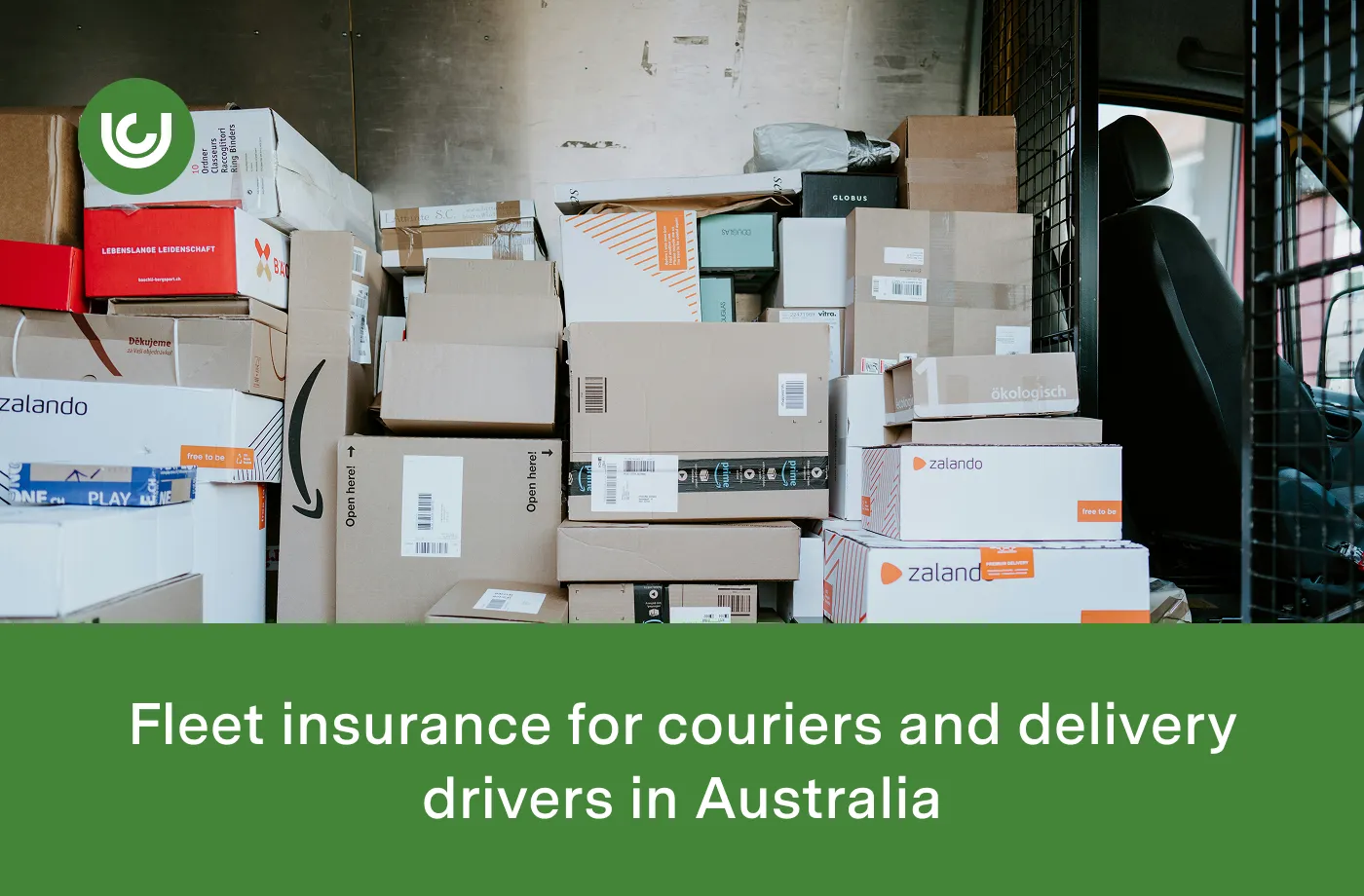
Courier fleet insurance may cover delivery vehicles, parcels, public liability and downtime risks. What courier fleets should check and how to get a quote.
What is commercial motor and fleet insurance? Learn how it protects Australian business vehicles, what it covers, fleet thresholds, and how to get a quote.
We are digitising commercial insurance and risk management for small, mid-market and technology businesses. We work with a global network of underwriters, challenging legacy brokers and delivering market leading coverage to our customers.