Small Businesses
Tech Companies
Motor & Fleet

Industrial Special Risks

Industrial Special Risks Insurance

Industrial Special Risks cover for buildings, stock, plant & equipment, plus business interruption.

— The basics

What is Industrial Special Risks Insurance

Industrial Special Risks, also called ISR insurance, is commercial property insurance for bigger or complex sites and businesses with values from a minimum of $5-10m in asset value. It can help cover buildings, stock and equipment and lost income after insured damage. Ready to help protect your assets?

— Why it matters

Why is it important?

For larger Australian businesses, one major property loss can disrupt operations and cash flow fast. ISR insurance may help with repair costs, damaged assets and lost income after an insured event, so recovery can feel more manageable.

— The Basics

What is

Industrial Special Risks

Industrial Special Risks, also called ISR insurance, is commercial property insurance for bigger or complex sites and businesses with values from a minimum of $5-10m in asset value. It can help cover buildings, stock and equipment and lost income after insured damage. Ready to help protect your assets?

— Why it Matters

Why is it important?

For larger Australian businesses, one major property loss can disrupt operations and cash flow fast. ISR insurance may help with repair costs, damaged assets and lost income after an insured event, so recovery can feel more manageable.

70,000+

Businesses

4.9/5

Customer Rating

80+

Insurance Partners

upcover white logo

Businesses covered

Choose from over 1,000+ business types

upcover logo

Coverage highlights

What is usually covered under Industrial Special Risks insurance

Here’s what this policy typically helps with. Exact cover depends on your insurer and policy wording.

Smart digital process Direct market access
Buildings

Designed to cover repair or replacement of your premises after insured events like fire, storm, explosion or malicious damage.

Extra costs after damage

May include reasonable temporary repairs and professional fees (like architects or engineers) needed to reinstate your property.

Business interruption

If property damage stops you trading, ISR insurance can help with lost gross profit and increased costs to keep operating (within limits).

Stock and materials

Business property cover for raw materials, work in progress and finished stock if it’s damaged at the insured location.

Contents and equipment

Commercial asset insurance for things inside the building, like fit-out, tools and business equipment.

upcover logo

Claims examples

Common Industrial Special Risks insurance claims

Simple, real-world examples to help you better understand how coverage might work with this policy.

Vehicle impact damage
SCENARIO

A delivery truck reverses into your roller door and knocks a wall panel out. Racking collapses and pallets of goods are damaged. The loading bay is unsafe, so you divert deliveries and operate at lower capacity until repairs are complete.

WHY IT’S COVERED

Impact by a vehicle can be covered damage to your building and contents. If operations drop, Section 2 may cover lost gross profit.

Burst pipe and flooding
SCENARIO

A pipe bursts in the ceiling over the weekend and water floods the office and storeroom. Floors buckle, computers fail and boxed stock is soaked. You need drying fans, repairs and replacement equipment, plus extra time to get back to normal.

WHY IT’S COVERED

Water discharged from a burst pipe or sprinkler can be covered damage. If you are shut down, Section 2 may cover lost gross profit.

Storm and rainwater leak
SCENARIO

A severe storm rips sections of roof sheeting off your premises. Wind-driven rain gets into the warehouse and ruins cartons, packaging and some electrical boards. You need emergency tarps, a roofer and a full internal clean before reopening.

WHY IT’S COVERED

Storm, wind and rainwater damage are common insured events. If trading stops, Section 2 may cover lost gross profit and extra costs.

Factory fire and smoke
SCENARIO

An electrical fault starts a fire in your workshop after hours. Sprinklers slow it down, but smoke damages stock and machinery. The building needs repairs and you cannot trade for weeks while clean-up, drying and safety checks happen.

WHY IT’S COVERED

Material Damage is designed to cover repairs or replacement after fire and smoke. If Section 2 applies, it may cover lost gross profit.

SCENARIO

A support worker gave a participant the wrong medication due to a mislabeled pillbox. The participant experienced severe drowsiness and dehydration, requiring overnight hospitalization.

IS THIS COVERED?

Costs included $8,200 for hospital and rehabilitation, $12,500 for legal defence, and a $7,500 settlement to resolve the claim out of court.

Manual handling damage

SCENARIO

A support worker gave a participant the wrong medication due to a mislabeled pillbox. The participant experienced severe drowsiness and dehydration, requiring overnight hospitalization.

WHY IT'S EXCLUDED

Costs included $8,200 for hospital and rehabilitation, $12,500 for legal defence, and a $7,500 settlement to resolve the claim out of court.

SCENARIO

A support worker gave a participant the wrong medication due to a mislabeled pillbox. The participant experienced severe drowsiness and dehydration, requiring overnight hospitalization.

WHY IT'S EXCLUDED

Costs included $8,200 for hospital and rehabilitation, $12,500 for legal defence, and a $7,500 settlement to resolve the claim out of court.

SCENARIO

A delivery truck reverses into your roller door and knocks a wall panel out. Racking collapses and pallets of goods are damaged. The loading bay is unsafe, so you divert deliveries and operate at lower capacity until repairs are complete.

IS THIS COVERED?

Impact by a vehicle can be covered damage to your building and contents. If operations drop, Section 2 may cover lost gross profit.

Vehicle impact damage
SCENARIO

A pipe bursts in the ceiling over the weekend and water floods the office and storeroom. Floors buckle, computers fail and boxed stock is soaked. You need drying fans, repairs and replacement equipment, plus extra time to get back to normal.

IS THIS COVERED?

Water discharged from a burst pipe or sprinkler can be covered damage. If you are shut down, Section 2 may cover lost gross profit.

Burst pipe and flooding
SCENARIO

A severe storm rips sections of roof sheeting off your premises. Wind-driven rain gets into the warehouse and ruins cartons, packaging and some electrical boards. You need emergency tarps, a roofer and a full internal clean before reopening.

IS THIS COVERED?

Storm, wind and rainwater damage are common insured events. If trading stops, Section 2 may cover lost gross profit and extra costs.

Storm and rainwater leak
SCENARIO

An electrical fault starts a fire in your workshop after hours. Sprinklers slow it down, but smoke damages stock and machinery. The building needs repairs and you cannot trade for weeks while clean-up, drying and safety checks happen.

IS THIS COVERED?

Material Damage is designed to cover repairs or replacement after fire and smoke. If Section 2 applies, it may cover lost gross profit.

Factory fire and smoke
info icon

Important: Scenarios are examples only. Coverage is subject to policy terms, conditions and exclusions. Limits and sub-limits might apply. Policy wordings vary between insurers. Refer to the PDS or Policy Wording for details.

upcover white logo

Benefits

Why businesses trust upcover

Get quotes in minutes, adjust your cover as your business evolves, and lean on expert support to help you make confident insurance decisions.

upcover logo

Who it’s for

Who needs Industrial Special Risks insurance?

Types of businesses who might be contractually required or recommended to take out this insurance.

GET INSTANT QUOTE
Smart digital process Direct market access
Large retail and showroom sites

Big premises with fit-out, signage and stock can be costly to restore after fire or storm. ISR can help cover the building and contents and business interruption so you can keep paying key costs while repairs happen.

Wholesalers and importers

High-value inventory and busy dispatch areas mean big losses when things go wrong. ISR may suit businesses needing commercial property insurance for stock and equipment, plus help with lost profit if damage forces a shutdown.

Food and beverage production

Cold rooms, ovens and processing lines are expensive to fix and hard to replace fast. ISR can help if insured damage stops production, covering the building and equipment, spoiled stock where covered and business interruption during downtime.

Warehouses and logistics

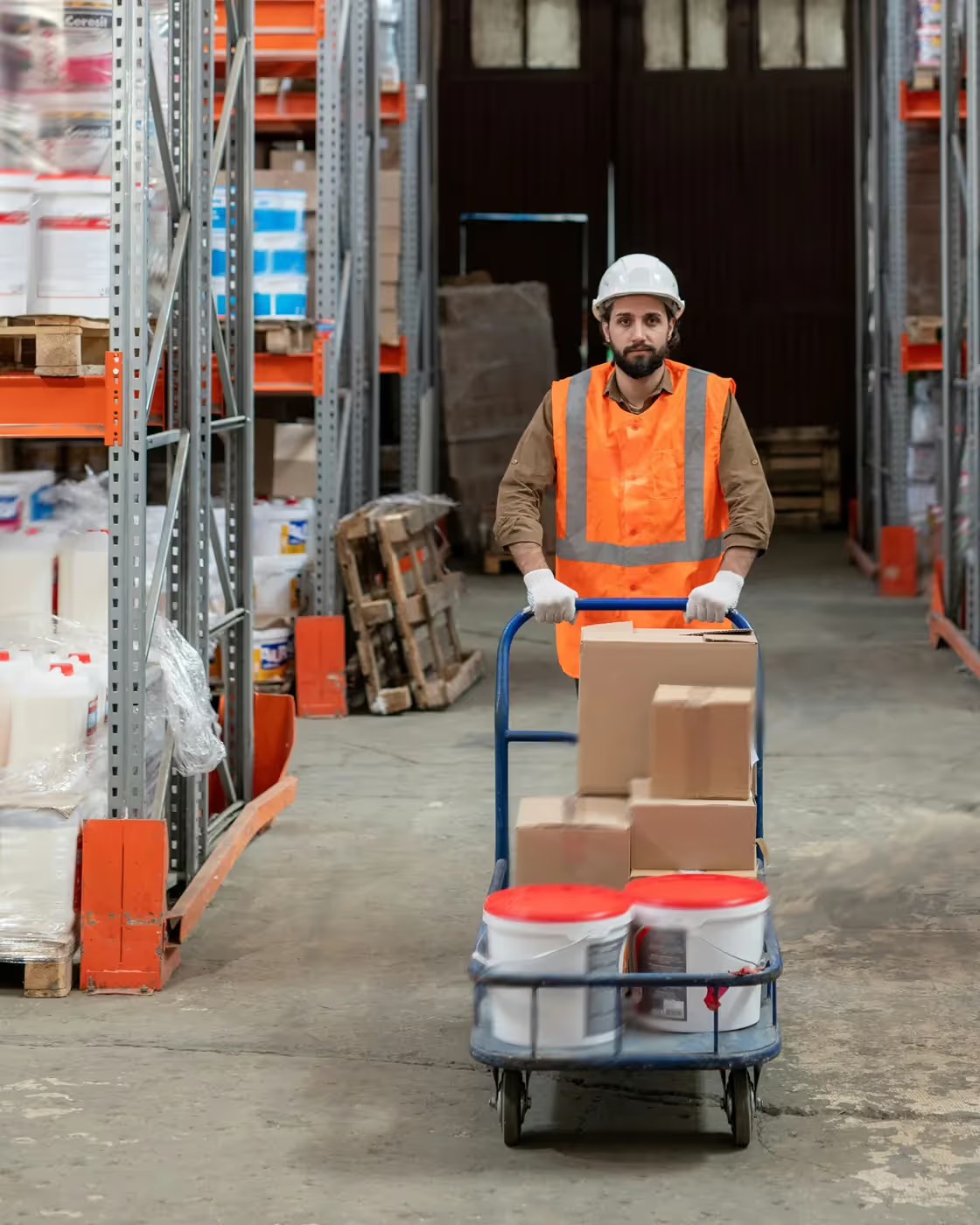
Warehouses hold large volumes of stock and depend on safe loading areas. If storm damage, impact or water damage ruins goods or shuts the site, cover may help with property repairs, damaged stock and the costs of keeping deliveries moving.

Manufacturers and factories

Factories often rely on specialised plant and constant production. If fire, storm or a burst pipe damages the site, ISR insurance can help cover repairs, replacement of equipment and stock and income lost while you get back up and running.

upcover logo

Exclusions

Typical exclusions under Industrial Special Risks insurance?

Common examples of what is generally outside cover. Check the insurer policy wording to confirm the details.

Flood and sea damage
SCENARIO

Heavy rain causes a nearby creek to break its banks and water enters your premises. Stock is ruined and electrics need replacing. You also lose trade while the site is dried out. The loss is from rising floodwater, not a burst pipe.

WHY IT’S COVERED

Flood and sea water are often excluded unless flood is added in the schedule. Storm damage is treated differently, so check the wording.

Pollution or seepage
SCENARIO

A drum of chemical cleaner tips over in your warehouse and soaks into the concrete. You must shut down and bring in specialists to test, remove contaminated material and clean the site so you can reopen safely and meet regulator requirements.

WHY IT’S COVERED

Most ISR policies exclude pollution or contamination clean-up costs, unless limited cover applies after a listed insured event.

Faulty design or work
SCENARIO

You install new piping and a joint fails because it was fitted incorrectly. Water damages the wall and floor. The claim includes the cost to redo the bad work, plus the cost to repair the surrounding area that was soaked in the leak.

WHY IT’S COVERED

Faulty workmanship or design errors are typically excluded. Cover may apply only to the resulting damage, not fixing the defect.

Wear and tear damage
SCENARIO

A roof slowly leaks over months and moisture warps timber and plaster. Nothing sudden happens. By the time you notice, the damage is widespread and the building needs major repairs, even though there was no specific storm or accident you can point to.

WHY IT’S COVERED

ISR usually excludes gradual deterioration and wear and tear. It’s built for sudden, unexpected damage, not maintenance issues.

SCENARIO

A support worker gave a participant the wrong medication due to a mislabeled pillbox. The participant experienced severe drowsiness and dehydration, requiring overnight hospitalization.

WHY IT'S EXCLUDED

Costs included $8,200 for hospital and rehabilitation, $12,500 for legal defence, and a $7,500 settlement to resolve the claim out of court.

Manual handling damage

SCENARIO

A support worker gave a participant the wrong medication due to a mislabeled pillbox. The participant experienced severe drowsiness and dehydration, requiring overnight hospitalization.

WHY IT'S EXCLUDED

Costs included $8,200 for hospital and rehabilitation, $12,500 for legal defence, and a $7,500 settlement to resolve the claim out of court.

SCENARIO

A support worker gave a participant the wrong medication due to a mislabeled pillbox. The participant experienced severe drowsiness and dehydration, requiring overnight hospitalization.

WHY IT'S EXCLUDED

Costs included $8,200 for hospital and rehabilitation, $12,500 for legal defence, and a $7,500 settlement to resolve the claim out of court.

SCENARIO

Heavy rain causes a nearby creek to break its banks and water enters your premises. Stock is ruined and electrics need replacing. You also lose trade while the site is dried out. The loss is from rising floodwater, not a burst pipe.

WHY IT'S EXCLUDED

Flood and sea water are often excluded unless flood is added in the schedule. Storm damage is treated differently, so check the wording.

Flood and sea damage
SCENARIO

A drum of chemical cleaner tips over in your warehouse and soaks into the concrete. You must shut down and bring in specialists to test, remove contaminated material and clean the site so you can reopen safely and meet regulator requirements.

WHY IT'S EXCLUDED

Most ISR policies exclude pollution or contamination clean-up costs, unless limited cover applies after a listed insured event.

Pollution or seepage
SCENARIO

You install new piping and a joint fails because it was fitted incorrectly. Water damages the wall and floor. The claim includes the cost to redo the bad work, plus the cost to repair the surrounding area that was soaked in the leak.

WHY IT'S EXCLUDED

Faulty workmanship or design errors are typically excluded. Cover may apply only to the resulting damage, not fixing the defect.

Faulty design or work
SCENARIO

A roof slowly leaks over months and moisture warps timber and plaster. Nothing sudden happens. By the time you notice, the damage is widespread and the building needs major repairs, even though there was no specific storm or accident you can point to.

WHY IT'S EXCLUDED

ISR usually excludes gradual deterioration and wear and tear. It’s built for sudden, unexpected damage, not maintenance issues.

Wear and tear damage
info icon

Important: These scenarios are examples only. Policy exclusions may differ between insurers and policy wordings. Limits and sub-limits might apply. Always refer to your specific policy wording for complete details.

upcover logo

Price factors

Factors affecting cost of Industrial Special Risks insurance

Your premium is based on your details and the cover options you choose. There is no one set price for every business.

What Affects your Industrial Special Risks Insurance premium?

Site & build

Your location, building type and construction matter. Insurers consider hazards like flood zones, bushfire exposure, security and how easy it would be to repair or rebuild after damage at that address.

Sums insured

Higher declared values for buildings, contents, plant and stock usually mean a higher premium. Accurate values help avoid underinsurance and make sure your commercial property insurance matches what it would cost to replace.

Business activity

What you do on-site changes the risk. Manufacturing, storage of flammables, hot works, or heavy machinery can increase risk. Insurers also look at housekeeping, maintenance and safety systems used day to day.

Excess & limits

A higher excess can reduce premium, while a lower excess can cost more. Premium is also affected by add-ons like business interruption period length, higher limits and optional extensions under ISR insurance.

upcover logo

Explore more

Other cover types

Browse from a range of cover types to match your business’ unique needs.

Public & Products Liability

Covers injury & property claims from your services, products or at your business

GET INSTANT QUOTE
TALK TO AN EXPERT
START A QUOTE
Professional Indemnity

Covers negligence claims from third parties to help protect your business from professional errors

GET INSTANT QUOTE
TALK TO AN EXPERT
START A QUOTE
Tools of trade

Covers theft, damage or loss to work tools and equipment incl power tools, machinery and laptops

GET INSTANT QUOTE
TALK TO AN EXPERT
START A QUOTE
Corporate Travel

Covers travel locally or overseas. This can include business trips and some personal travel also

GET INSTANT QUOTE
TALK TO AN EXPERT
START A QUOTE
upcover logo

FAQs

Industrial Special Risks insurance queries

How do I make a claim?

addminus
You should notify your insurer as soon as you become aware of a claim or circumstance that may give rise to a claim which could include a client complaint, you discovering an incident or an allegation of harm. Claims should be made in writing and handled in line with the claims notification requirements which will be outlined in your policy wording.
Learn More

How do I make a claim?

add

What is a Certificate of Currency?

addminus
A Certificate of Currency is issued by an insurance company and is something you can use as proof that your existing insurance policy is valid. It contains all the information regarding your policy. You may be asked from time to time to prove your insurance - for loans to your business, for landlords of your premises, or for certain clients you might have. The moment you purchase your insurance from upcover you can send your proof of insurance to whoever requires it, at just a click of a button.
Learn More

What is a Certificate of Currency?

add

How quickly do I need to report an incident to my insurer?

addminus
You should notify your insurer as soon as you become aware of any incident, claim, or circumstance that may give rise to a claim. Professional Indemnity insurance typically operates on a "claims made and notified" basis, meaning both the claim must be made against you AND you must notify the insurer during the active insurance period (or discovery period if applicable). Late notification after policy expiry may not be covered unless you have purchased an extended discovery period. Prompt notification is essential to protect your rights under your insurance.
Learn More

How quickly do I need to report an incident to my insurer?

add

What is a retroactive date?

addminus
A retroactive date is the earliest date from which a claim can arise and still be covered under your policy. Professional Indemnity and certain other claims-made policies will only respond to claims arising from acts, errors or omissions that occurred on or after the retroactive date listed in your policy schedule. If an incident occurred before your retroactive date, it typically will not be covered even if the claim is made during the current policy period. Maintaining continuous cover without gaps helps protect your retroactive date — check your policy schedule or ask your broker if you are unsure of your retroactive date.
Learn More

What is a retroactive date?

add
upcover logo

Blogs

From our blog

Coverage, risk management and compliance, explained in plain English.

VIEW MORE
VIEW MORE

We are digitising commercial insurance and risk management for small, mid-market and technology businesses. We work with a global network of underwriters, challenging legacy brokers and delivering market leading coverage to our customers.