Select how you’d like to proceed with your insurance needs.
Talk to a real insurance expert on your time.
15-minutes consultation with licensed advisors
Perfect if you’re unsure about coverage needs
Get personalised recommendations
Already have coverage? Let’s simplify your service
Keep your current carriers & policies
Simple digital authorisation process
Seamless transition to better service
Goods in transit insurance for loss or damage while travelling by road, sea or air in Australia.
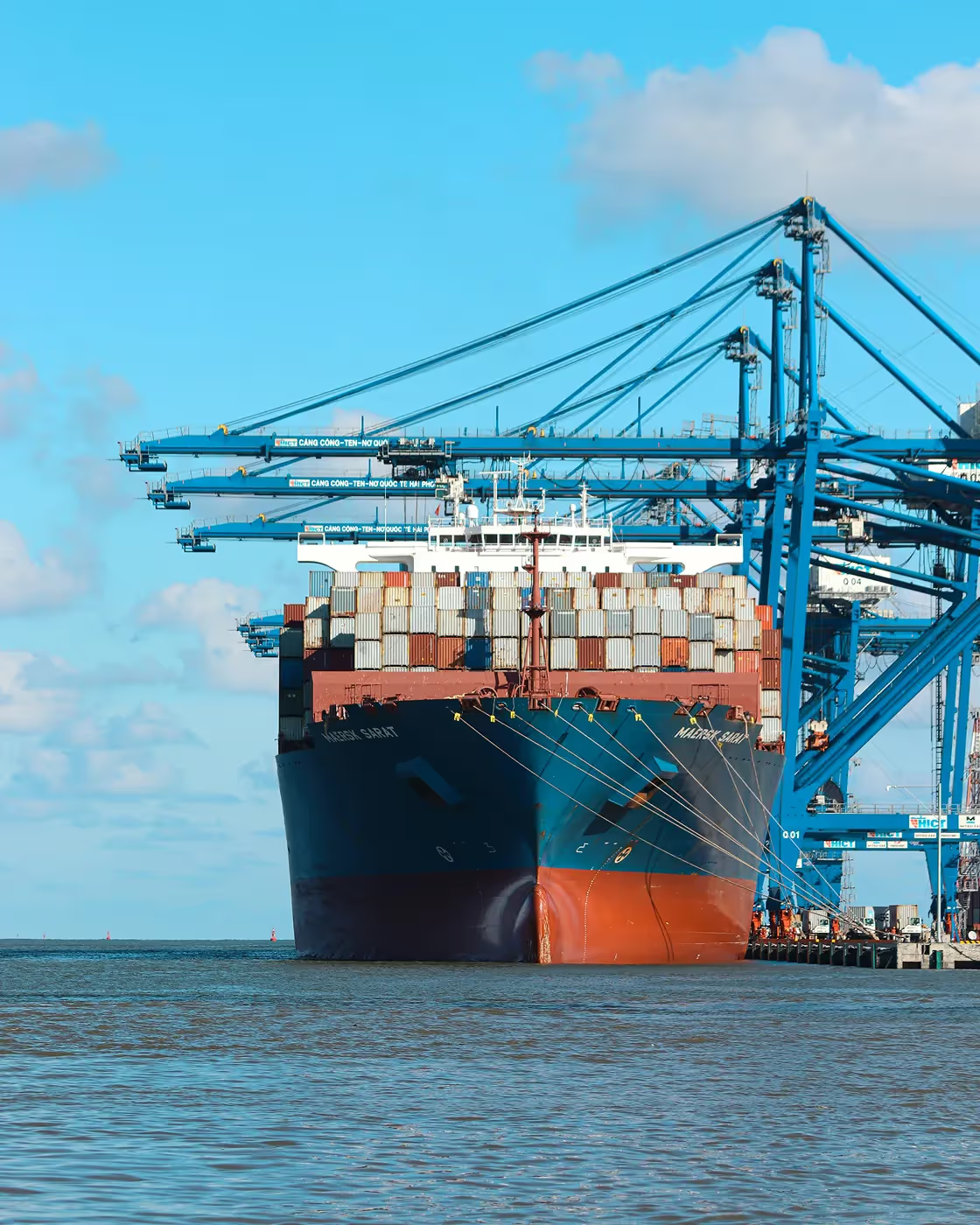
Marine cargo insurance protects your stock if it’s lost or damaged while moving. It’s goods in transit insurance for sea, air or road shipments, giving cargo transit cover across Australia and beyond.
Start a Quote to get cover.
In Australia, stock often travels long distances between suppliers, ports, warehouses and customers. Marine cargo insurance may help businesses manage the cost if goods are lost or damaged in transit, which can matter for cash flow, delivery timelines and replacing stock.
Marine cargo insurance protects your stock if it’s lost or damaged while moving. It’s goods in transit insurance for sea, air or road shipments, giving cargo transit cover across Australia and beyond.
Start a Quote to get cover.
In Australia, stock often travels long distances between suppliers, ports, warehouses and customers. Marine cargo insurance may help businesses manage the cost if goods are lost or damaged in transit, which can matter for cash flow, delivery timelines and replacing stock.
Businesses
Customer Rating
Insurance Partners
Businesses covered
Coverage highlights
Here’s what this policy typically helps with. Exact cover depends on your insurer and policy wording.
Insurance is designed to cover theft, pilferage, shortage or non delivery in transit. For sealed containers, insurance may apply when the seal is intact at unloading and you can prove what was loaded.
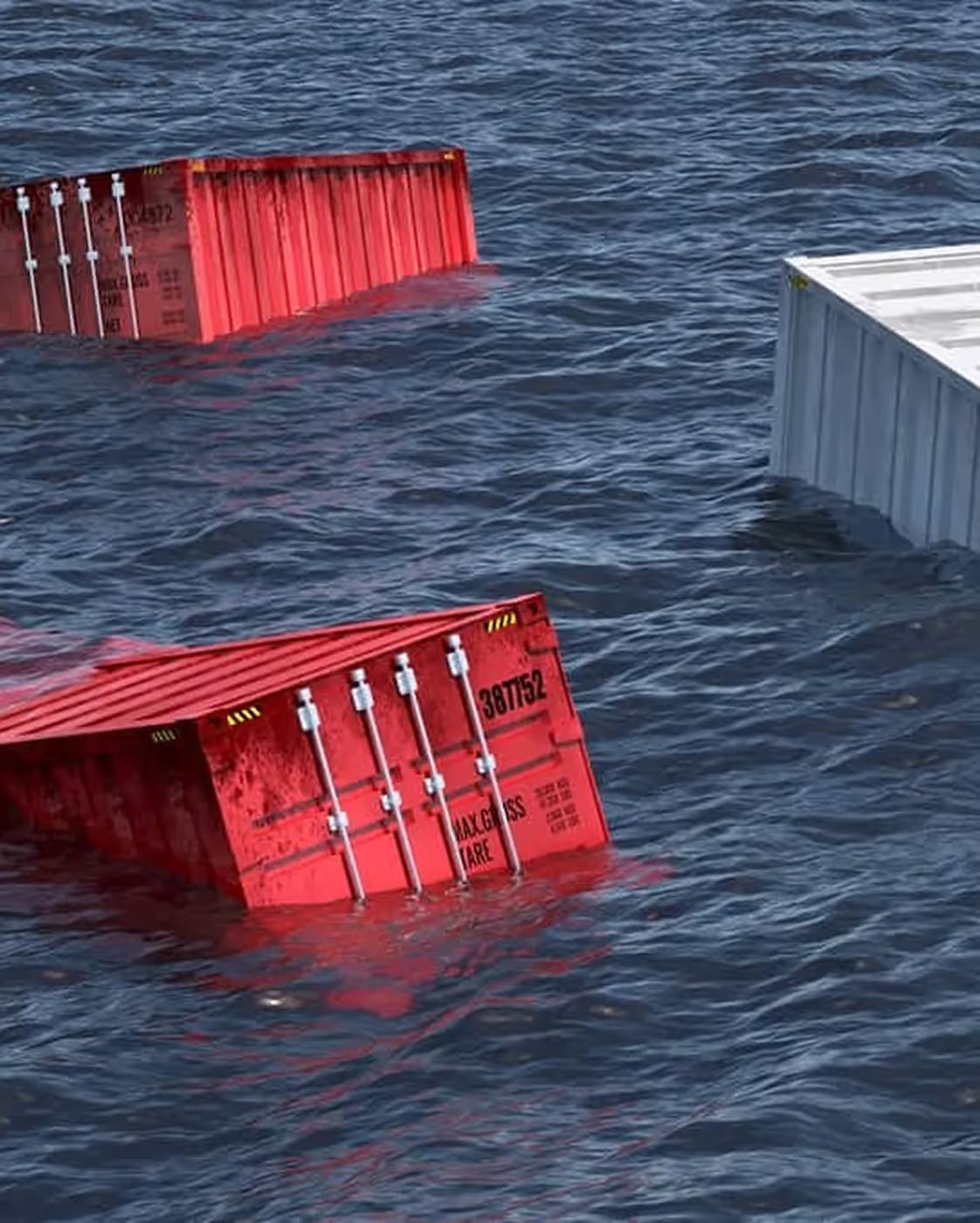
Can respond if goods are jettisoned or washed overboard to protect the vessel or voyage. This can also apply at sea or port during rough weather and emergencies in transit.
Covers physical loss, destruction or damage to your goods caused by an accident during an insured transit. Useful when cargo gets hit, dropped, or damaged while moving.
If the general average is declared and you must contribute after a shared shipping loss, this insurance may help pay your general average sacrifice for the insured cargo when required.
Helps with general average and salvage charges set under the contract of carriage and law. These costs can arise when steps are taken to avoid or reduce a covered loss.


Insurance is designed to cover theft, pilferage, shortage or non delivery in transit. For sealed containers, insurance may apply when the seal is intact at unloading and you can prove what was loaded.

Can respond if goods are jettisoned or washed overboard to protect the vessel or voyage. This can also apply at sea or port during rough weather and emergencies in transit.

Covers physical loss, destruction or damage to your goods caused by an accident during an insured transit. Useful when cargo gets hit, dropped, or damaged while moving.

If the general average is declared and you must contribute after a shared shipping loss, this insurance may help pay your general average sacrifice for the insured cargo when required.

Helps with general average and salvage charges set under the contract of carriage and law. These costs can arise when steps are taken to avoid or reduce a covered loss.
Claims examples
Simple, real-world examples to help you better understand how coverage might work with this policy.
A vessel fire forces the shipowner to declare a general average. Your cargo is not damaged, but you must pay a contribution and related salvage costs before release. You send the adjustment statement and receipts and claim those charges.
insurance may apply for general average sacrifice, plus general average and salvage charges you must pay, when linked to a covered event.
A coastal shipment meets heavy seas off the NSW coast. One strapped package breaks loose and is washed overboard. The carrier confirms the loss and provides voyage documents, so you lodge a claim for the value of the lost package.
Some wordings cover jettison or washing overboard, including total loss of a package lost overboard during loading or unloading.
You import goods into Sydney in a full container load. At your warehouse the container seal matches the paperwork, but some cartons are missing. You provide packing lists, container docs and a police report, then claim for the missing items.
Where an FCL seal is intact at unloading, theft, pilferage, shortage or non-delivery can be recoverable if you prove what was loaded.
A pallet of stock is unloaded at a Melbourne freight depot. A forklift clips it and several cartons fall and smash. The driver notes the damage on the docket, you keep photos and invoices and the goods cannot be sold.
insurance may apply for physical loss, destruction or damage caused by an accident occurring during an insured transit, up to your limit.
A support worker gave a participant the wrong medication due to a mislabeled pillbox. The participant experienced severe drowsiness and dehydration, requiring overnight hospitalization.
Costs included $8,200 for hospital and rehabilitation, $12,500 for legal defence, and a $7,500 settlement to resolve the claim out of court.
A support worker gave a participant the wrong medication due to a mislabeled pillbox. The participant experienced severe drowsiness and dehydration, requiring overnight hospitalization.
Costs included $8,200 for hospital and rehabilitation, $12,500 for legal defence, and a $7,500 settlement to resolve the claim out of court.
A support worker gave a participant the wrong medication due to a mislabeled pillbox. The participant experienced severe drowsiness and dehydration, requiring overnight hospitalization.
Costs included $8,200 for hospital and rehabilitation, $12,500 for legal defence, and a $7,500 settlement to resolve the claim out of court.
Important: Scenarios are examples only. Coverage is subject to policy terms, conditions and exclusions. Limits and sub-limits might apply. Policy wordings vary between insurers. Refer to the PDS or Policy Wording for details.
Benefits
Get quotes in minutes, adjust your cover as your business evolves, and lean on expert support to help you make confident insurance decisions.
Who it’s for
Types of businesses who might be contractually required or recommended to take out this insurance.
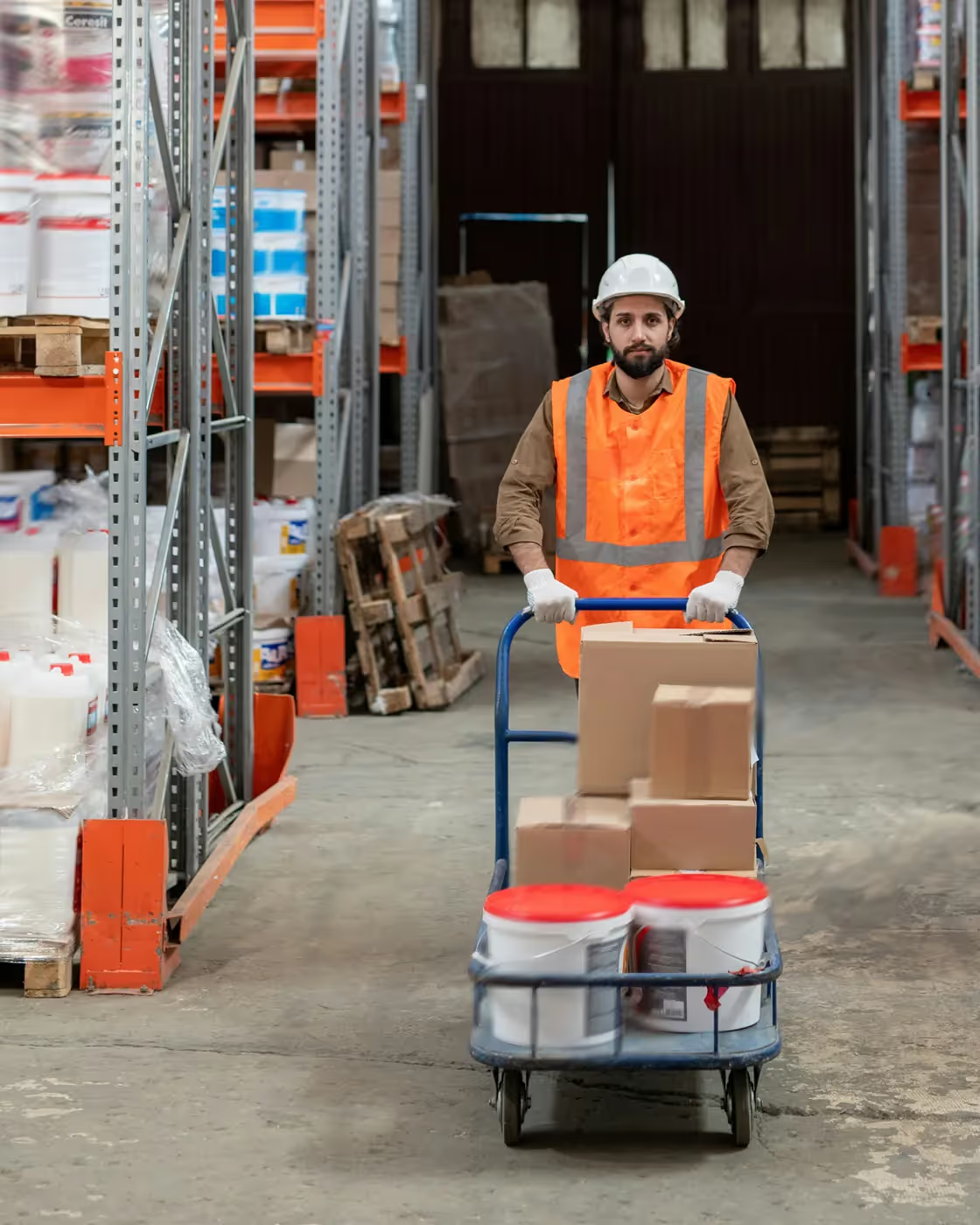
If you ship products to customers every day, goods in transit insurance can help when parcels are lost, stolen, or damaged in delivery, so you are not wearing the cost alone.
If you send materials, fixtures or equipment to sites, freight insurance may help when items are damaged in transit or go missing, especially for high value or time critical deliveries.
If you arrange transport for clients, transit insurance Australia options can help cover customer cargo you are responsible for under contract, from pickup through to delivery and handover.
If you move finished goods between factories, warehouses and customers, transport goods insurance can help protect your products while they travel by road, sea or air across Australia.
If you bring goods into Australia, marine cargo insurance can help protect stock while it moves from overseas suppliers to your warehouse, including port handling and inland delivery steps.


If you ship products to customers every day, goods in transit insurance can help when parcels are lost, stolen, or damaged in delivery, so you are not wearing the cost alone.

If you send materials, fixtures or equipment to sites, freight insurance may help when items are damaged in transit or go missing, especially for high value or time critical deliveries.

If you arrange transport for clients, transit insurance Australia options can help cover customer cargo you are responsible for under contract, from pickup through to delivery and handover.

If you move finished goods between factories, warehouses and customers, transport goods insurance can help protect your products while they travel by road, sea or air across Australia.

If you bring goods into Australia, marine cargo insurance can help protect stock while it moves from overseas suppliers to your warehouse, including port handling and inland delivery steps.
Exclusions
Common examples of what is generally outside cover. Check the insurer policy wording to confirm the details.
A laptop shipment arrives with screens not working. Testing shows an internal electrical fault with no external impact marks. The cartons are intact and there is no sign of a covered event like collision, theft, fire or water entry.
Policies may not cover electrical, mechanical or electronic failure unless there is external visible damage from an insured event.
A shipment from Perth to Melbourne is delayed after a port backlog and rebooking. Your stock arrives a week late, you miss a promo window and you pay extra warehousing fees while you wait. You have invoices and delivery updates showing the delay.
Policies often exclude loss caused by delay, even if an insured event is involved. They also exclude consequential loss like lost profit.
Frozen seafood is loaded in good condition, but it starts to thaw during transit because it was not cold enough when packed. The boxes arrive soft and unsafe to sell. There is no accident, theft, or water damage, just spoilage.
Policies often exclude inherent vice or nature of the goods, plus ordinary leakage or loss in weight, unless a covered event caused it.
Your team packs glass bottles into thin cartons with little padding. During road freight from Sydney to Brisbane, the cartons collapse and bottles shatter. The carrier notes rough handling, but the damage links back to weak packing.
Policies often exclude loss caused by insufficient or unsuitable packing when you or your staff packed or prepared the goods.
A support worker gave a participant the wrong medication due to a mislabeled pillbox. The participant experienced severe drowsiness and dehydration, requiring overnight hospitalization.
Costs included $8,200 for hospital and rehabilitation, $12,500 for legal defence, and a $7,500 settlement to resolve the claim out of court.
A support worker gave a participant the wrong medication due to a mislabeled pillbox. The participant experienced severe drowsiness and dehydration, requiring overnight hospitalization.
Costs included $8,200 for hospital and rehabilitation, $12,500 for legal defence, and a $7,500 settlement to resolve the claim out of court.
A support worker gave a participant the wrong medication due to a mislabeled pillbox. The participant experienced severe drowsiness and dehydration, requiring overnight hospitalization.
Costs included $8,200 for hospital and rehabilitation, $12,500 for legal defence, and a $7,500 settlement to resolve the claim out of court.
Important: These scenarios are examples only. Policy exclusions may differ between insurers and policy wordings. Limits and sub-limits might apply. Always refer to your specific policy wording for complete details.
Price factors
Your premium is based on your details and the cover options you choose. There is no one set price for every business.
Higher declared value usually means a higher premium because the insurer may need to pay more if something goes wrong. Your sum insured, including any uplift for charges, helps set the base price for cover.
What you ship matters. Fragile, high theft, or temperature sensitive goods can cost more to insure than low risk items. Some products need extra terms, packing standards, or handling requirements.
Where the goods travel affects risk. Local road freight, coastal shipping, or international imports can price differently. Distance, ports, storage points and higher risk routes can change the premium you pay.
Your excess and cover terms influence price. A higher excess can reduce premium. Adding broader conditions, higher limits, or extra options can increase cost depending on the wording and the level of risk.
Explore more
Browse from a range of cover types to match your business’ unique needs.
FAQs
Blogs
Coverage, risk management and compliance, explained in plain English.
Jul 28, 2023
Insurance Basics
What Should I Look For When Choosing Delivery Driver Insurance?
Jul 5, 2023
Insurance Basics
Learn about the various types of business liability insurance in Australia, including general liability, public liability, professional liability, and management liability.
May 20, 2022
Business 101
Are you thinking of starting your own business but don't know what risks are involved? This article will break down some risk business owners may face.
We are digitising commercial insurance and risk management for small, mid-market and technology businesses. We work with a global network of underwriters, challenging legacy brokers and delivering market leading coverage to our customers.