Small Businesses
Tech Companies
Motor & Fleet

Crime

Crime Insurance

Cover loss from employee dishonesty, theft and scam payments, with support to get back on track.

— The basics

What is Crime Insurance

Crime insurance, also called business crime insurance, can help cover losses from employee theft, fraud, or scam payments. It may cover stolen money, stock, or unauthorised transfers.

Start a Quote to see options.

— Why it matters

Why is it important?

Even well-run Australian businesses can be hit by employee theft, fraud or unauthorised transfers. Crime insurance may help with direct financial loss from these events, subject to the policy wording. That can matter when cash flow, stock or daily operations take a hit.

— The Basics

What is

Crime

Crime insurance, also called business crime insurance, can help cover losses from employee theft, fraud, or scam payments. It may cover stolen money, stock, or unauthorised transfers.

Start a Quote to see options.

— Why it Matters

Why is it important?

Even well-run Australian businesses can be hit by employee theft, fraud or unauthorised transfers. Crime insurance may help with direct financial loss from these events, subject to the policy wording. That can matter when cash flow, stock or daily operations take a hit.

70,000+

Businesses

4.9/5

Customer Rating

80+

Insurance Partners

upcover white logo

Businesses covered

Choose from over 1,000+ business types

upcover logo

Coverage highlights

What is usually covered under Crime insurance

Here’s what this policy typically helps with. Exact cover depends on your insurer and policy wording.

Smart digital process Direct market access
Theft of financial instruments

May cover loss if an employee steals financial instruments such as cheques or similar payment instruments, resulting in direct financial loss to the business, subject to the wording.

Unauthorised electronic transfers

May cover theft and fraud insurance losses from unauthorised electronic transfers or payments made by an employee, including improper use of online banking or payment systems.

Collusion with others

Crime insurance is designed to cover losses where an employee works alone or in collusion with another person to steal from the business, as long as the dishonest act and direct loss are proven.

Theft of business money

Crime insurance is designed to cover loss of money or funds belonging to the business if it is stolen by an employee, whether taken from your premises, cash holdings, or while in the employee's care.

Employee theft and dishonesty

Covers financial loss when an employee commits a dishonest or fraudulent act. This employee fraud insurance can include theft of your business funds or assets during the policy period.

upcover logo

Claims examples

Common Crime insurance claims

Simple, real-world examples to help you better understand how coverage might work with this policy.

Stock stolen after hours
SCENARIO

A trusted employee takes cartons of stock and small equipment home after closing, then marks them as ‘damaged’ in your system. You only notice when popular items keep showing as out of stock and a stocktake confirms the missing goods.

WHY IT’S COVERED

May cover direct financial loss when an employee unlawfully takes your property or stock, alone or in collusion, subject to wording.

Fake refunds by staff
SCENARIO

A staff member processes a string of ‘customer refunds’ to a card they control, using real receipt numbers. The daily takings look normal until you review the refund report and confirm the customers never requested the refunds.

WHY IT’S COVERED

May cover direct financial loss caused by employee dishonesty, like fraudulent refunds that cost your business money, subject to terms.

Payroll rerouted by staff
SCENARIO

A payroll officer updates an employee’s bank details to their own, then runs the next pay cycle. The payment goes out and they delete the change request. You spot the mismatch when reconciling payroll and the bank file.

WHY IT’S COVERED

Business crime insurance may cover direct financial loss from an employee’s dishonest act, including unauthorised taking of money, subject to wording and limits.

Staff steals your funds
SCENARIO

Your bookkeeper transfers small amounts into their own account each week, then edits the ledger to hide it. You discover the missing money during month end checks and confirm it was an intentional, unauthorised act by an employee.

WHY IT’S COVERED

May cover direct financial loss when an employee steals company money and you discover it during the policy period, subject to wording.

SCENARIO

A support worker gave a participant the wrong medication due to a mislabeled pillbox. The participant experienced severe drowsiness and dehydration, requiring overnight hospitalization.

IS THIS COVERED?

Costs included $8,200 for hospital and rehabilitation, $12,500 for legal defence, and a $7,500 settlement to resolve the claim out of court.

Manual handling damage

SCENARIO

A support worker gave a participant the wrong medication due to a mislabeled pillbox. The participant experienced severe drowsiness and dehydration, requiring overnight hospitalization.

WHY IT'S EXCLUDED

Costs included $8,200 for hospital and rehabilitation, $12,500 for legal defence, and a $7,500 settlement to resolve the claim out of court.

SCENARIO

A support worker gave a participant the wrong medication due to a mislabeled pillbox. The participant experienced severe drowsiness and dehydration, requiring overnight hospitalization.

WHY IT'S EXCLUDED

Costs included $8,200 for hospital and rehabilitation, $12,500 for legal defence, and a $7,500 settlement to resolve the claim out of court.

SCENARIO

A trusted employee takes cartons of stock and small equipment home after closing, then marks them as ‘damaged’ in your system. You only notice when popular items keep showing as out of stock and a stocktake confirms the missing goods.

IS THIS COVERED?

May cover direct financial loss when an employee unlawfully takes your property or stock, alone or in collusion, subject to wording.

Stock stolen after hours
SCENARIO

A staff member processes a string of ‘customer refunds’ to a card they control, using real receipt numbers. The daily takings look normal until you review the refund report and confirm the customers never requested the refunds.

IS THIS COVERED?

May cover direct financial loss caused by employee dishonesty, like fraudulent refunds that cost your business money, subject to terms.

Fake refunds by staff
SCENARIO

A payroll officer updates an employee’s bank details to their own, then runs the next pay cycle. The payment goes out and they delete the change request. You spot the mismatch when reconciling payroll and the bank file.

IS THIS COVERED?

Business crime insurance may cover direct financial loss from an employee’s dishonest act, including unauthorised taking of money, subject to wording and limits.

Payroll rerouted by staff
SCENARIO

Your bookkeeper transfers small amounts into their own account each week, then edits the ledger to hide it. You discover the missing money during month end checks and confirm it was an intentional, unauthorised act by an employee.

IS THIS COVERED?

May cover direct financial loss when an employee steals company money and you discover it during the policy period, subject to wording.

Staff steals your funds
info icon

Important: Scenarios are examples only. Coverage is subject to policy terms, conditions and exclusions. Limits and sub-limits might apply. Policy wordings vary between insurers. Refer to the PDS or Policy Wording for details.

upcover white logo

Benefits

Why businesses trust upcover

Get quotes in minutes, adjust your cover as your business evolves, and lean on expert support to help you make confident insurance decisions.

upcover logo

Who it’s for

Who needs Crime insurance?

Types of businesses who might be contractually required or recommended to take out this insurance.

GET INSTANT QUOTE
Smart digital process Direct market access
Healthcare and allied health clinics

Runs payments, Medicare claims and regular banking. Crime cover insurance can help if an employee steals business funds or commits dishonest acts.

IT and SaaS businesses

Teams may access payment platforms and customer billing tools. Theft and fraud insurance can help if an employee misuses systems to move money or hide transactions.

Property and strata managers

Often manage rent, trust accounts and supplier payments. Commercial crime insurance can help if an employee diverts funds or commits fraud while handling money.

Retail stores and wholesalers

Stock, cash and refunds move fast and small losses add up. Business crime insurance can help with employee theft or dishonest refund activity.

Accounting and bookkeeping firms

Handles client payments, payroll and bank files every day. Crime protection insurance can help if an employee steals funds or makes an unauthorised transfer.

upcover logo

Exclusions

Typical exclusions under Crime insurance?

Common examples of what is generally outside cover. Check the insurer policy wording to confirm the details.

Unauthorised trading loss
SCENARIO

Your finance admin uses company funds to place risky share and crypto trades without approval. The trades go bad and you lose $30,000. You claim under crime cover for the missing money, saying it was an employee act, even though it was caused by trading activity.

WHY IT’S COVERED

Unauthorised trading losses are often excluded, even if an employee placed the trades. This is treated as a market loss, not theft.

Loss after you discover
SCENARIO

You catch a staff member skimming cash and confront them, but you keep them on while you ‘gather evidence’. Over the next two weeks, more money goes missing. You lodge a claim for the extra loss that happened after you first became aware of the dishonesty.

WHY IT’S COVERED

Policies may exclude extra loss after you discover employee dishonesty. Once discovered, you must act quickly to stop further loss.

Invoice scam payment
SCENARIO

A supplier email is spoofed and your staff member updates bank details, then pays a $24,500 invoice to the scammer. The money leaves your account with your authorisation. You later learn the supplier never changed details and you try to claim the payment back.

WHY IT’S COVERED

Social engineering scams are often excluded, where you are tricked into authorising a payment to a fraudster, even if the email looked real.

Lost sales after theft
SCENARIO

An employee steals $18,000 over three months. You recover some funds, but the bigger hit is the lost sales while you pause online orders, refund customers and rebuild trust. You claim for the drop in revenue and future bookings linked to the incident.

WHY IT’S COVERED

Usually covers direct financial loss only. Consequential loss like lost revenue or future sales is often excluded under the wording.

SCENARIO

A support worker gave a participant the wrong medication due to a mislabeled pillbox. The participant experienced severe drowsiness and dehydration, requiring overnight hospitalization.

WHY IT'S EXCLUDED

Costs included $8,200 for hospital and rehabilitation, $12,500 for legal defence, and a $7,500 settlement to resolve the claim out of court.

Manual handling damage

SCENARIO

A support worker gave a participant the wrong medication due to a mislabeled pillbox. The participant experienced severe drowsiness and dehydration, requiring overnight hospitalization.

WHY IT'S EXCLUDED

Costs included $8,200 for hospital and rehabilitation, $12,500 for legal defence, and a $7,500 settlement to resolve the claim out of court.

SCENARIO

A support worker gave a participant the wrong medication due to a mislabeled pillbox. The participant experienced severe drowsiness and dehydration, requiring overnight hospitalization.

WHY IT'S EXCLUDED

Costs included $8,200 for hospital and rehabilitation, $12,500 for legal defence, and a $7,500 settlement to resolve the claim out of court.

SCENARIO

Your finance admin uses company funds to place risky share and crypto trades without approval. The trades go bad and you lose $30,000. You claim under crime cover for the missing money, saying it was an employee act, even though it was caused by trading activity.

WHY IT'S EXCLUDED

Unauthorised trading losses are often excluded, even if an employee placed the trades. This is treated as a market loss, not theft.

Unauthorised trading loss
SCENARIO

You catch a staff member skimming cash and confront them, but you keep them on while you ‘gather evidence’. Over the next two weeks, more money goes missing. You lodge a claim for the extra loss that happened after you first became aware of the dishonesty.

WHY IT'S EXCLUDED

Policies may exclude extra loss after you discover employee dishonesty. Once discovered, you must act quickly to stop further loss.

Loss after you discover
SCENARIO

A supplier email is spoofed and your staff member updates bank details, then pays a $24,500 invoice to the scammer. The money leaves your account with your authorisation. You later learn the supplier never changed details and you try to claim the payment back.

WHY IT'S EXCLUDED

Social engineering scams are often excluded, where you are tricked into authorising a payment to a fraudster, even if the email looked real.

Invoice scam payment
SCENARIO

An employee steals $18,000 over three months. You recover some funds, but the bigger hit is the lost sales while you pause online orders, refund customers and rebuild trust. You claim for the drop in revenue and future bookings linked to the incident.

WHY IT'S EXCLUDED

Usually covers direct financial loss only. Consequential loss like lost revenue or future sales is often excluded under the wording.

Lost sales after theft
info icon

Important: These scenarios are examples only. Policy exclusions may differ between insurers and policy wordings. Limits and sub-limits might apply. Always refer to your specific policy wording for complete details.

upcover logo

Price factors

Factors affecting cost of Crime insurance

Your premium is based on your details and the cover options you choose. There is no one set price for every business.

What Affects your Crime Insurance premium?

Cover limit

Insurers price crime cover insurance based on the specified limit you choose. Higher limits for employee theft or fraud usually mean a higher premium because the potential payout is larger.

Excess chosen

Your excess is what you pay first if you claim. A higher excess can lower the premium, while a lower excess can cost more, because the insurer may pay smaller claims more often.

People & controls

Premiums can reflect how many people handle money and what controls you have. Dual approvals, regular auditsand restricted access can reduce risk and may help keep pricing down.

Turnover & funds

Business size matters. Turnover and how much money moves through your accounts can affect pricing, because higher volumes can increase the chance and size of theft and fraud losses.

upcover logo

Explore more

Other cover types

Browse from a range of cover types to match your business’ unique needs.

Professional Indemnity

Covers negligence claims from third parties to help protect your business from professional errors

GET INSTANT QUOTE
TALK TO AN EXPERT
START A QUOTE
Public & Products Liability

Covers injury & property claims from your services, products or at your business

GET INSTANT QUOTE
TALK TO AN EXPERT
START A QUOTE
Business Pack

Can include property, contents, glass, electrical equipment, business interruption, theft, contents

GET INSTANT QUOTE
TALK TO AN EXPERT
START A QUOTE
Cyber & Technology

Includes Professional Indemnity and Cyber & Technology Liability insurance for tech businesses

GET INSTANT QUOTE
TALK TO AN EXPERT
START A QUOTE
upcover logo

FAQs

Crime insurance queries

How do I make a claim?

addminus
You should notify your insurer as soon as you become aware of a claim or circumstance that may give rise to a claim which could include a client complaint, you discovering an incident or an allegation of harm. Claims should be made in writing and handled in line with the claims notification requirements which will be outlined in your policy wording.
Learn More

How do I make a claim?

add

What is a Certificate of Currency?

addminus
A Certificate of Currency is issued by an insurance company and is something you can use as proof that your existing insurance policy is valid. It contains all the information regarding your policy. You may be asked from time to time to prove your insurance - for loans to your business, for landlords of your premises, or for certain clients you might have. The moment you purchase your insurance from upcover you can send your proof of insurance to whoever requires it, at just a click of a button.
Learn More

What is a Certificate of Currency?

add

How quickly do I need to report an incident to my insurer?

addminus
You should notify your insurer as soon as you become aware of any incident, claim, or circumstance that may give rise to a claim. Professional Indemnity insurance typically operates on a "claims made and notified" basis, meaning both the claim must be made against you AND you must notify the insurer during the active insurance period (or discovery period if applicable). Late notification after policy expiry may not be covered unless you have purchased an extended discovery period. Prompt notification is essential to protect your rights under your insurance.
Learn More

How quickly do I need to report an incident to my insurer?

add

What is a retroactive date?

addminus
A retroactive date is the earliest date from which a claim can arise and still be covered under your policy. Professional Indemnity and certain other claims-made policies will only respond to claims arising from acts, errors or omissions that occurred on or after the retroactive date listed in your policy schedule. If an incident occurred before your retroactive date, it typically will not be covered even if the claim is made during the current policy period. Maintaining continuous cover without gaps helps protect your retroactive date — check your policy schedule or ask your broker if you are unsure of your retroactive date.
Learn More

What is a retroactive date?

add
upcover logo

Blogs

From our blog

Coverage, risk management and compliance, explained in plain English.

VIEW MORE
VIEW MORE

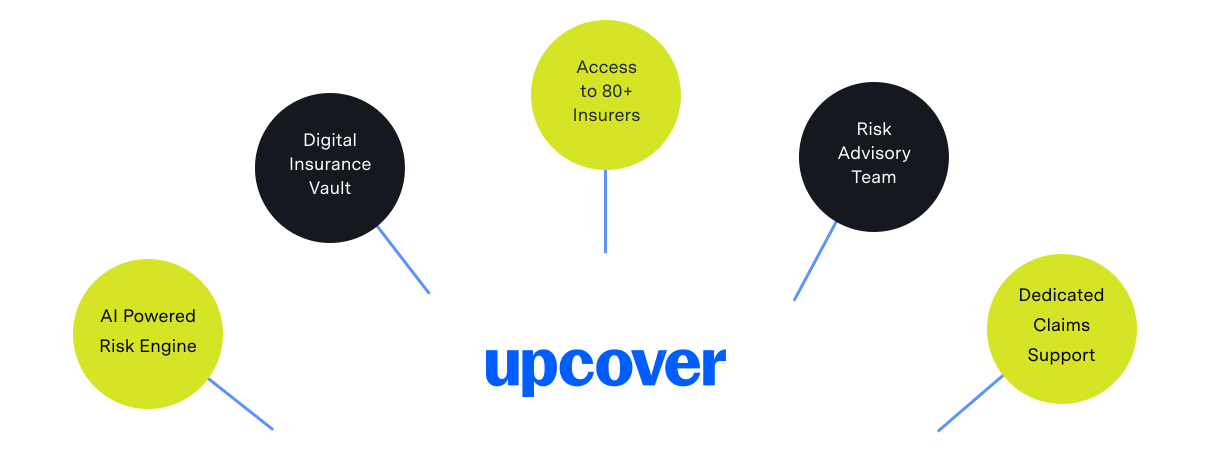
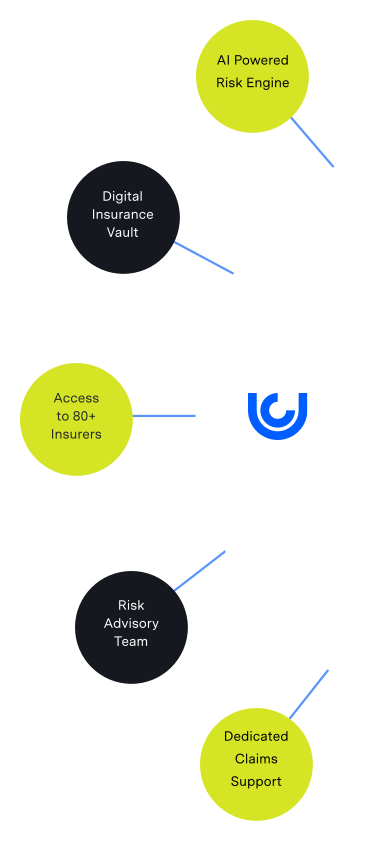
We are digitising commercial insurance and risk management for small, mid-market and technology businesses. We work with a global network of underwriters, challenging legacy brokers and delivering market leading coverage to our customers.